Consumer Hardware Pest Control Startup (2024-present)
Contents
Searching for a New Direction
After realizing that the robotics studio was becoming a stable business rather than a startup that could scale quickly, I began looking for a new direction that was worth long-term commitment. In April 2024, I joined XbotPark Camp, where I met many founders working on hardware products.
The first direction I explored was companion robotics. The central question was how to build a robot that could deliver a more natural sense of companionship, instead of stopping at AI conversation or visual styling.
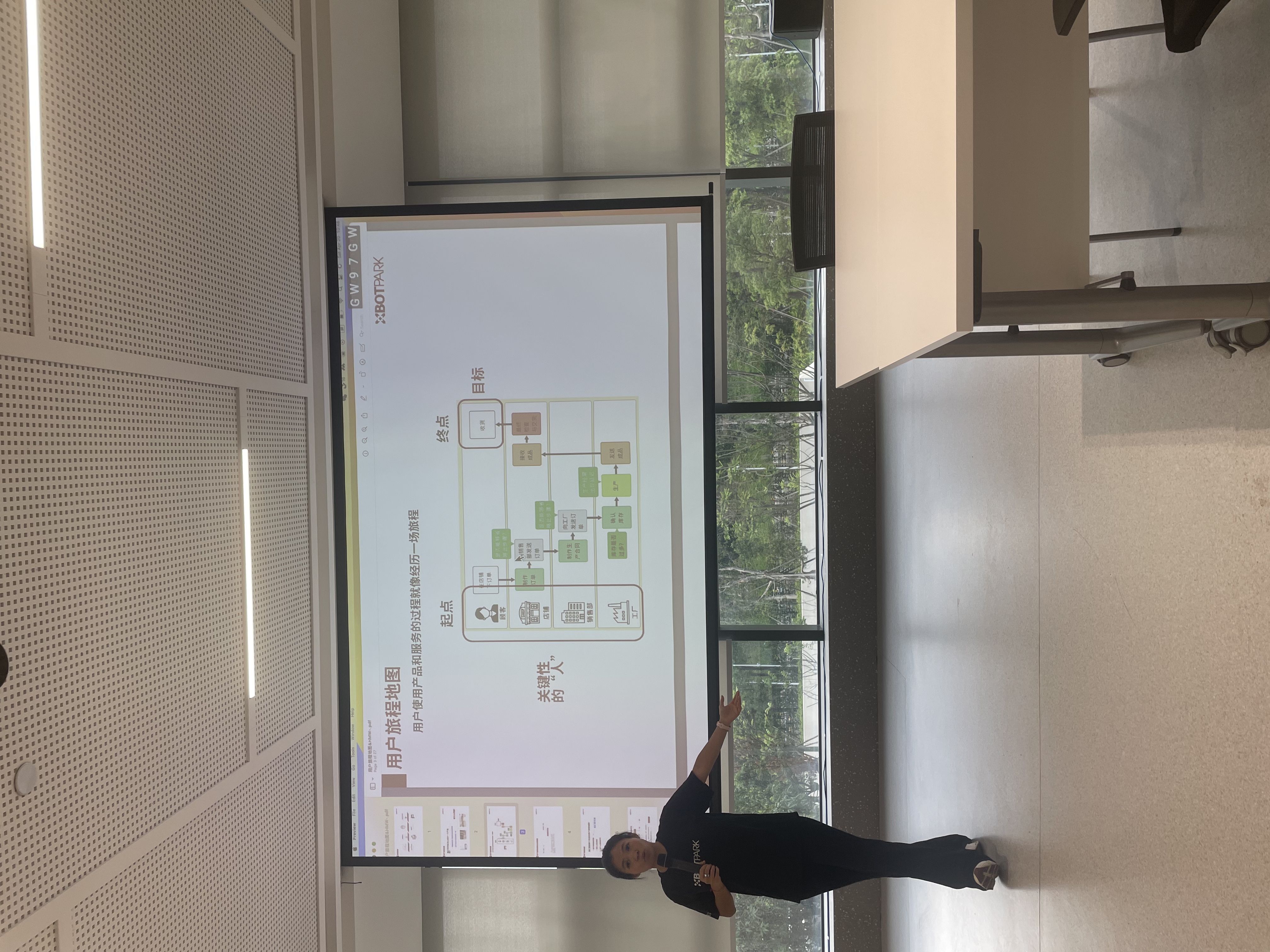
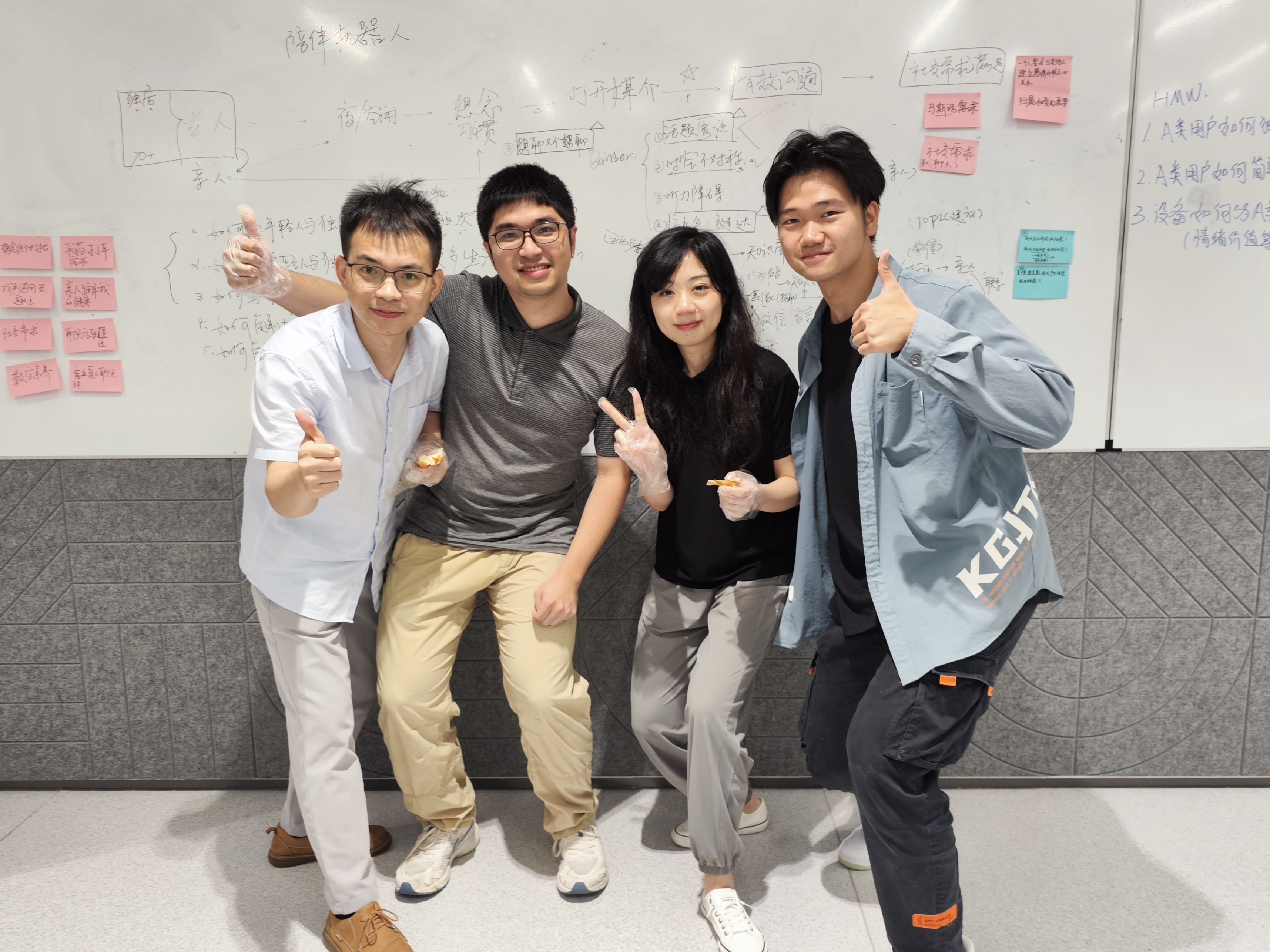
After roughly two months of user interviews, we still could not find a strong software-hardware entry point. Around that time, I met Enzo through an investor friend. He was looking for a technical co-founder, and I was looking for a direction with real market pull. We eventually focused on Pest Control, a traditional market with persistent demand and significant room for technical improvement.
Why Pest Control
The previous studio experience taught me that choosing the right market matters as much as building the product. A good consumer hardware direction should have a large market, long-term demand, a reasonable competitive landscape, and a clear reason for software and hardware to work together.
My initial screening criteria were:
- A large market with a high ceiling and persistent demand.
- Avoiding direct competition with major home-appliance companies and highly saturated outbound hardware categories.
- Focusing on global markets, where consumer hardware can have healthier margins.
- Choosing a traditional field that has not yet been deeply modernized by technology.
- Creating stickiness through hardware, software, services, and potentially recurring value.
Pest Control matched these filters. It is traditional, widely needed, and still underserved in safety, effectiveness, cleanup, placement guidance, remote notification, and intelligent management.
Because the product has not officially launched yet, many details cannot be disclosed. At a high level, the work focuses on:
- Intelligent IoT.
- Safer and more humane handling.
- Easier cleanup and post-processing.
- Better placement guidance and continued usage.
Starting from Field Research
At the beginning, we did not raise money or scale immediately. Two of us started from the problem itself. This stage felt closer to research: the answer was not clear upfront, so we had to repeatedly validate assumptions in real environments.
We started from a small workspace in Hangzhou and spent most of our time on field research and prototype testing.
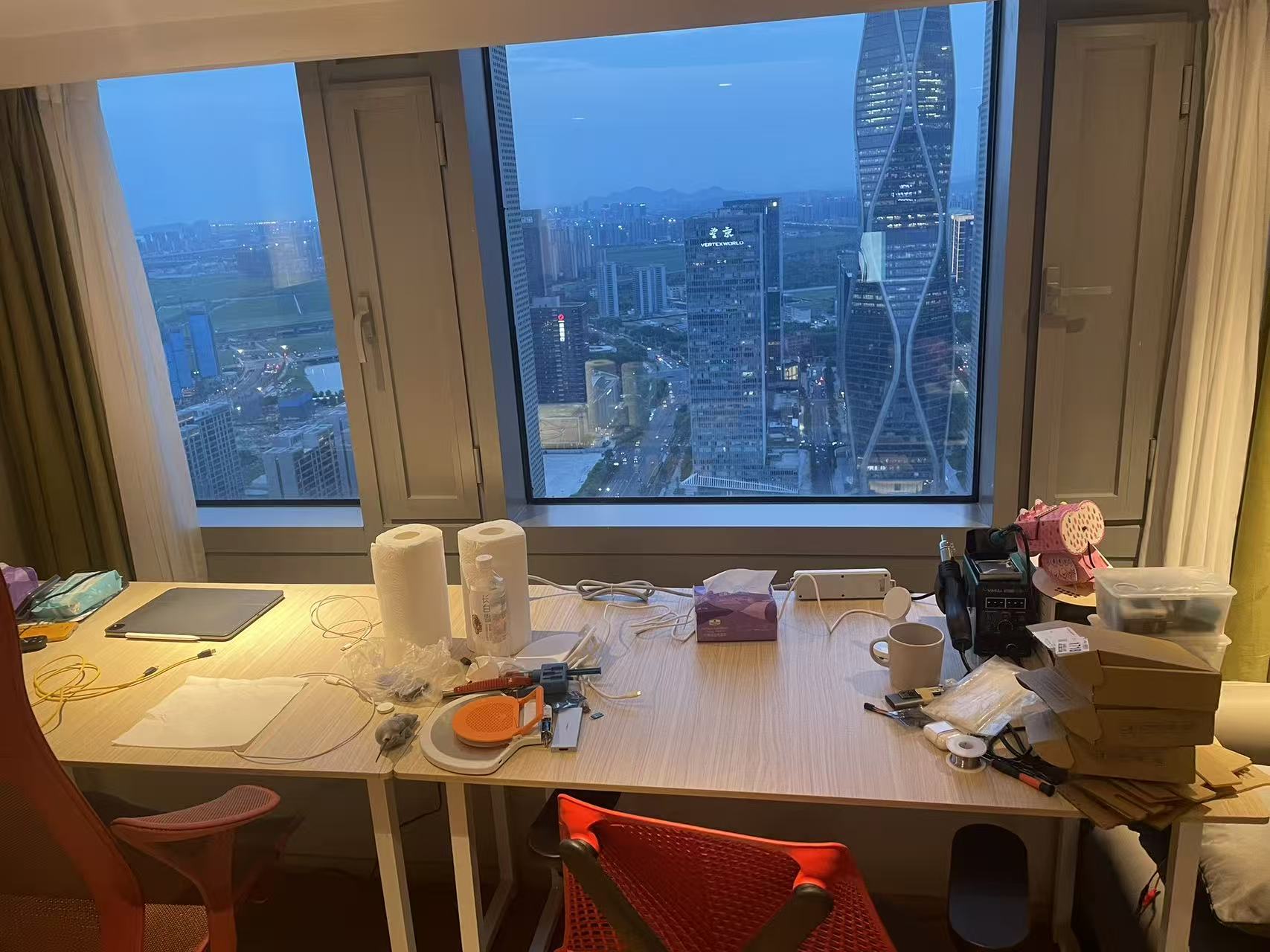
The first small office in Hangzhou.
We also worked closely with a pest control service company, following technicians into restaurants, kitchens, homes, and other real environments. At that stage, we were still deciding whether the first product should target consumers or service companies, so understanding the real workflow was the priority.
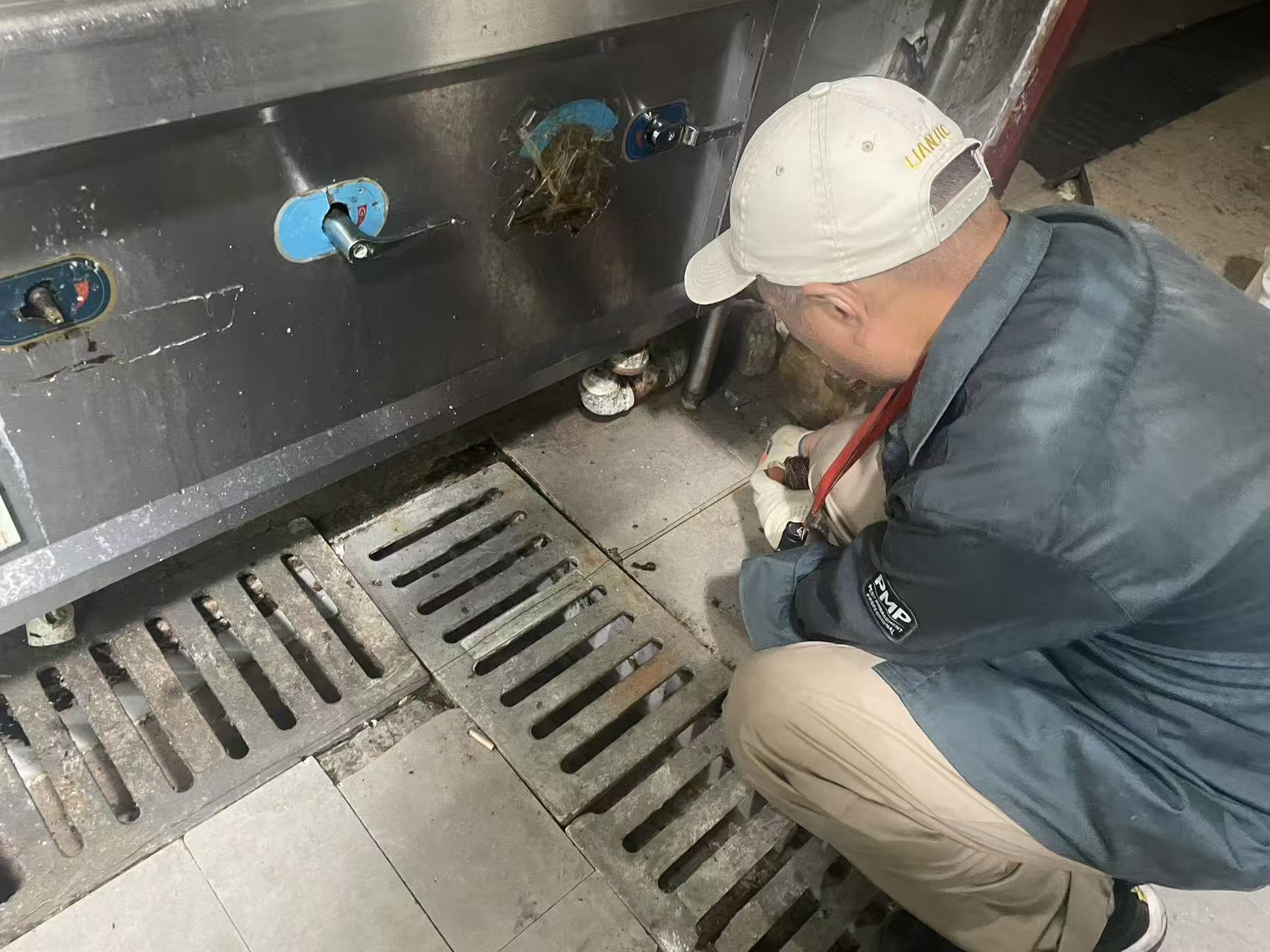
Field research with service technicians.
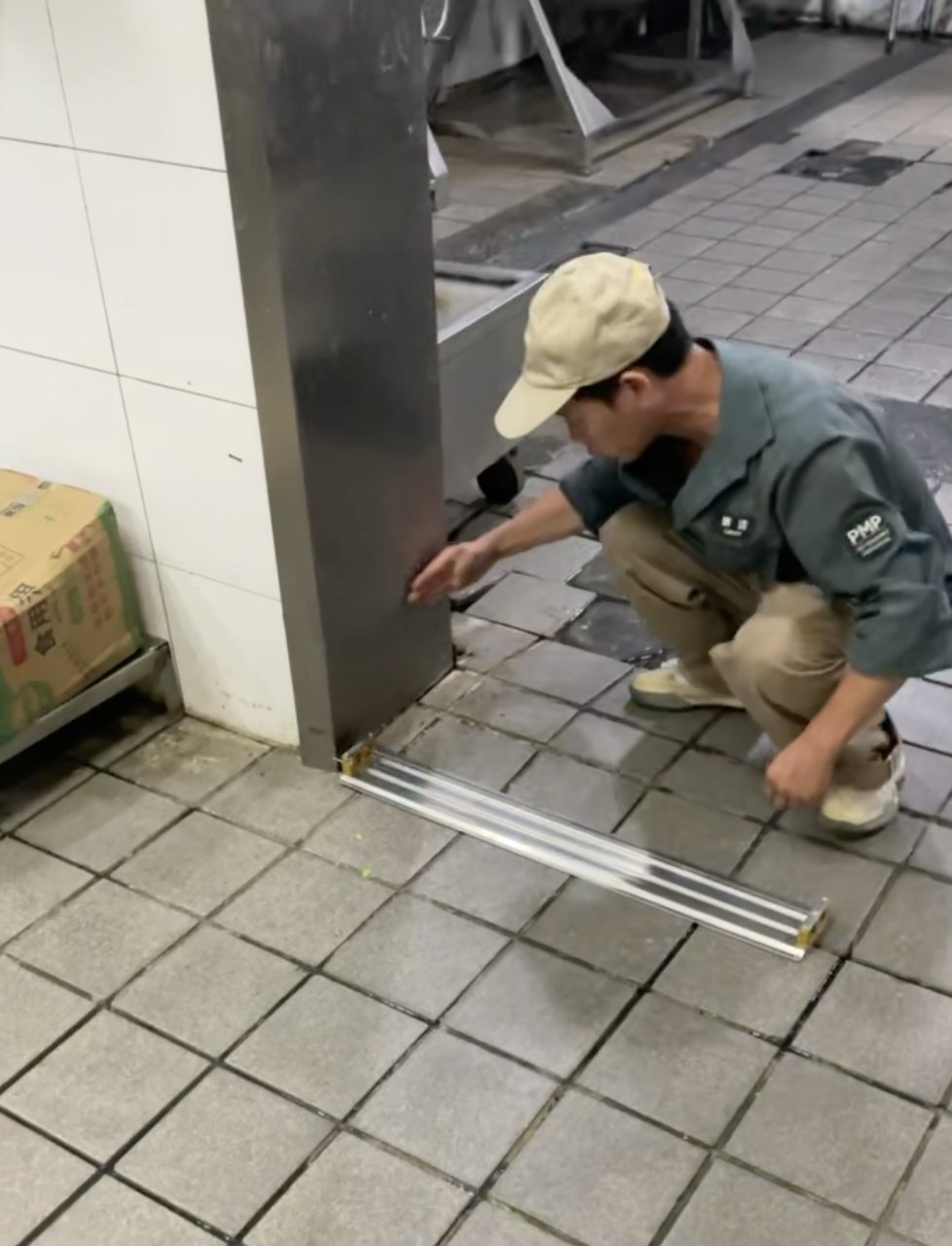
Studying existing tools and their limitations.
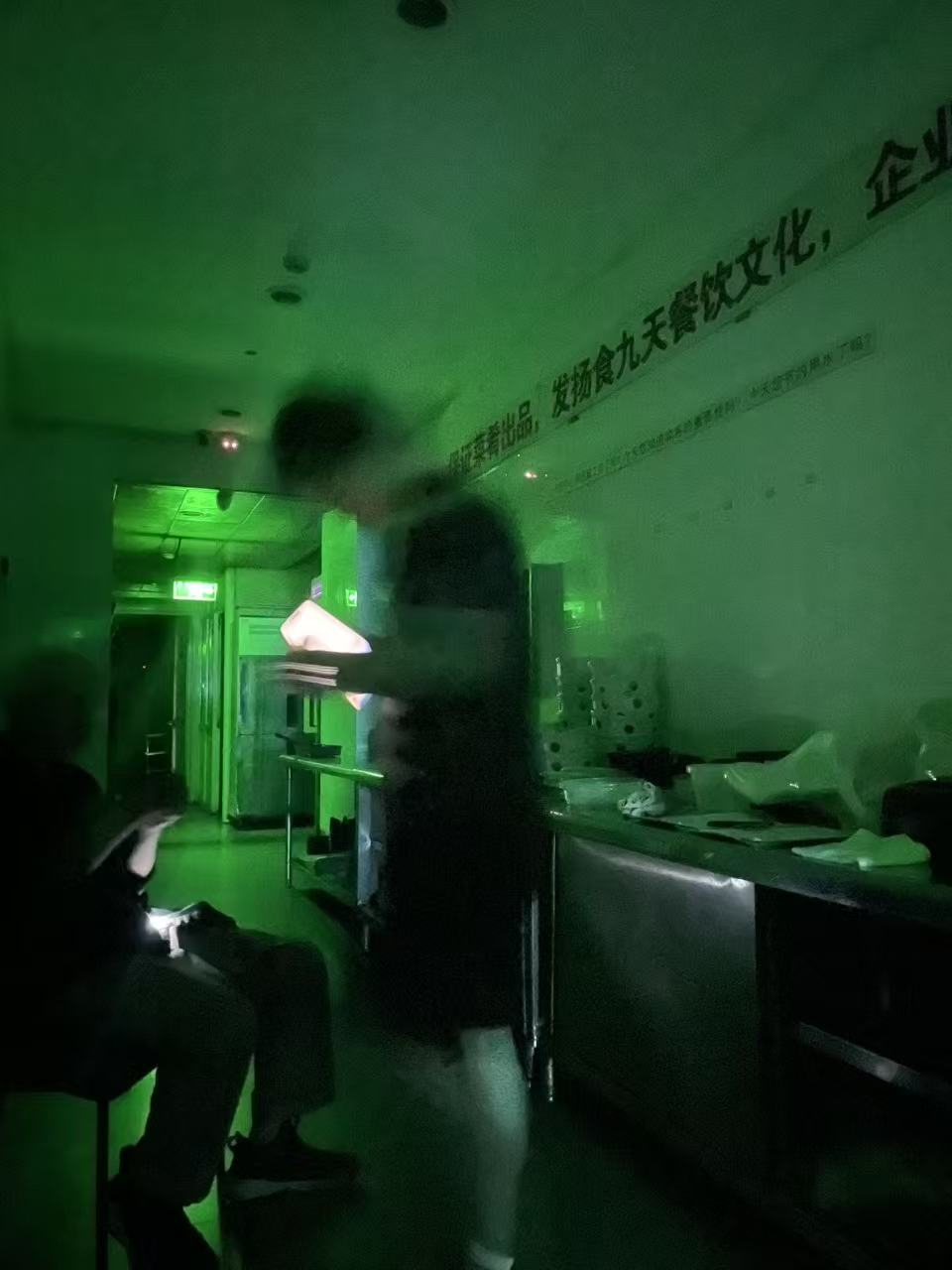
One of the early field-testing approaches.
Early Sensing and Test Platforms
One of the first insights was that the product needed a safer and more controllable way to detect, trigger, notify, and support cleanup. Around that goal, we worked on mechanical structure, circuits, embedded systems, sensors, and data logging at the same time.
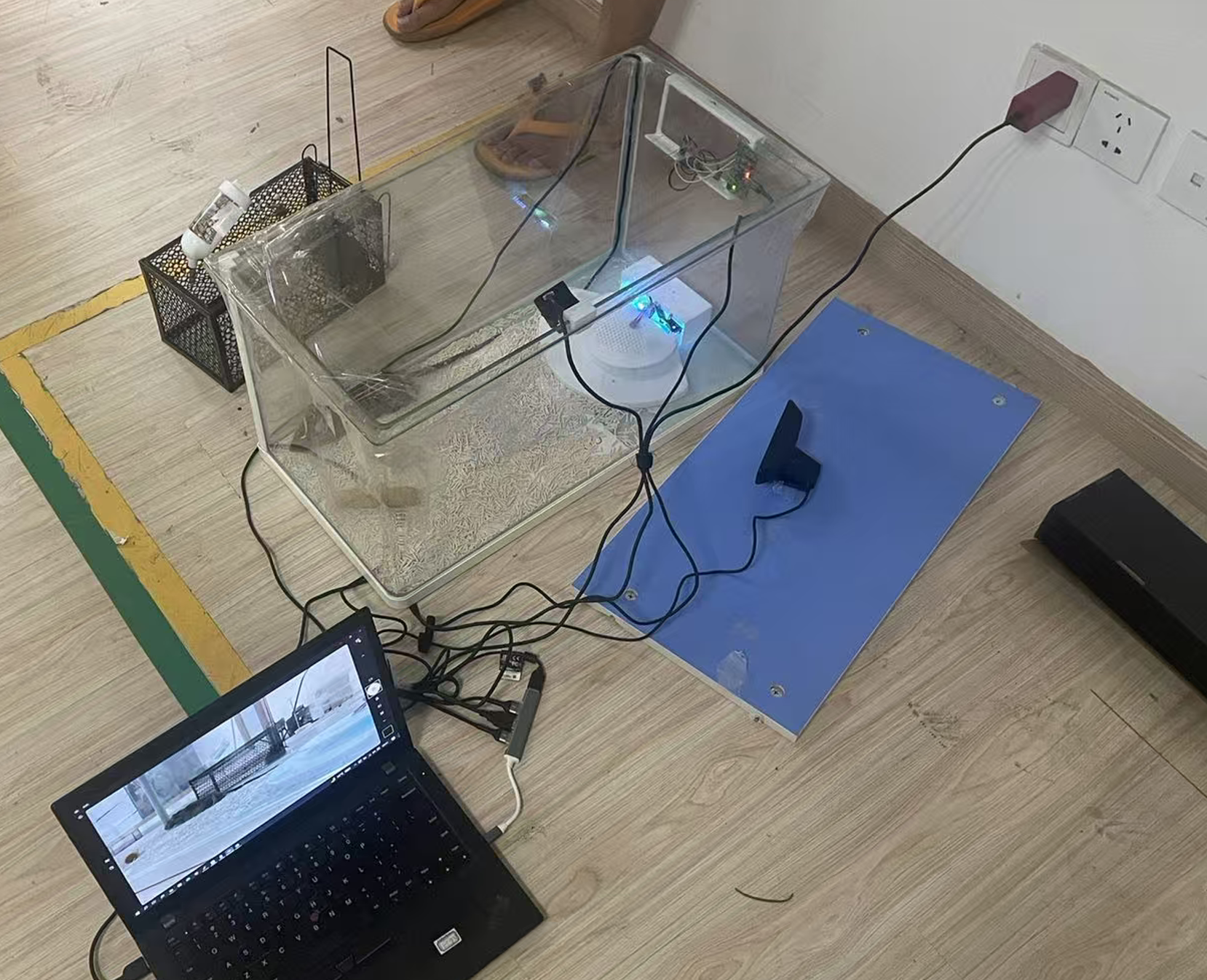
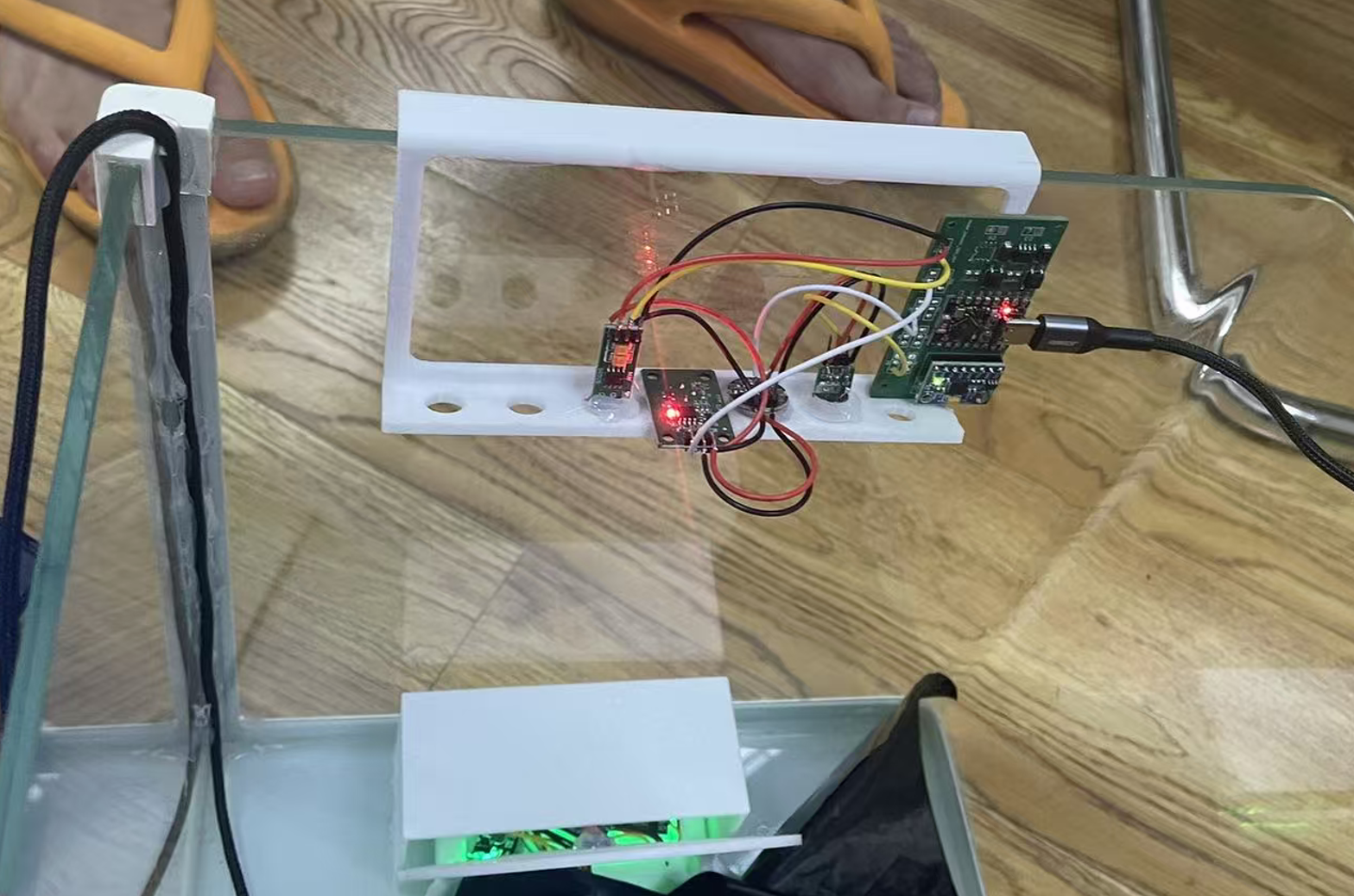
An early data-collection device for video, sound, vibration, and infrared data.
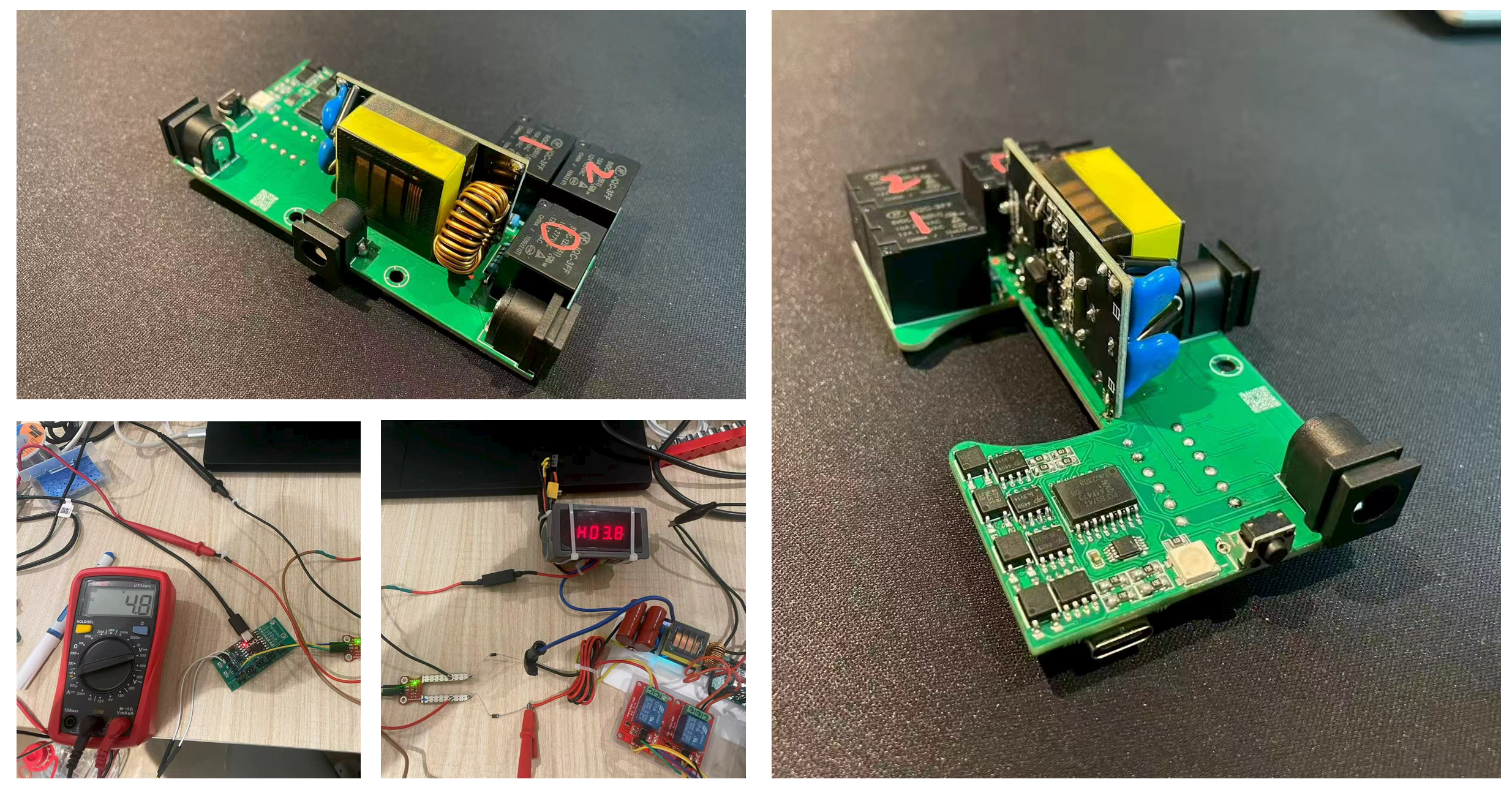
The first test circuit.
We built multiple experimental setups to test different structures, detection methods, and trigger strategies. The work was fragmented but important because it forced the product definition to come from reality rather than imagination.
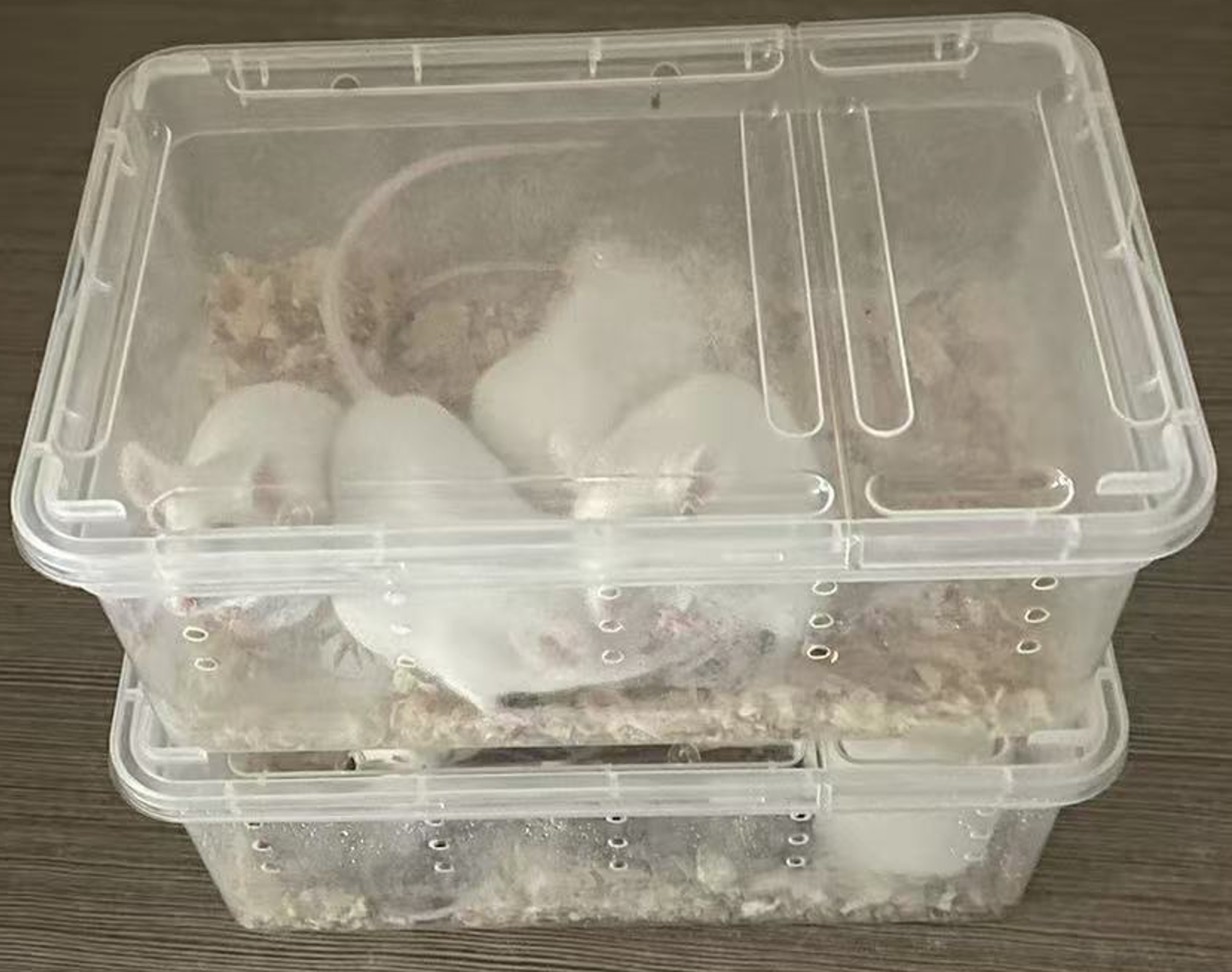
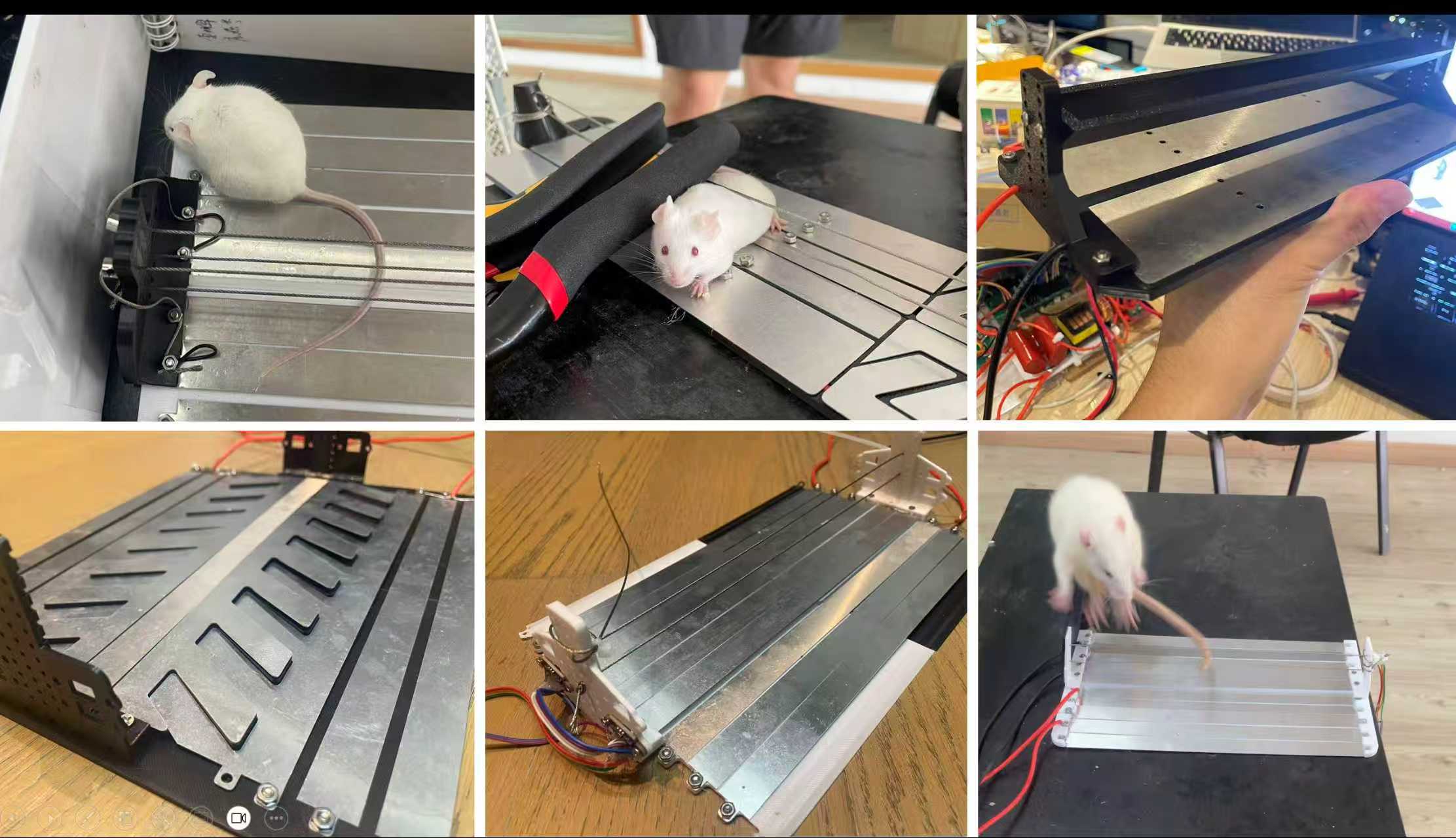
Early form-factor experiments.
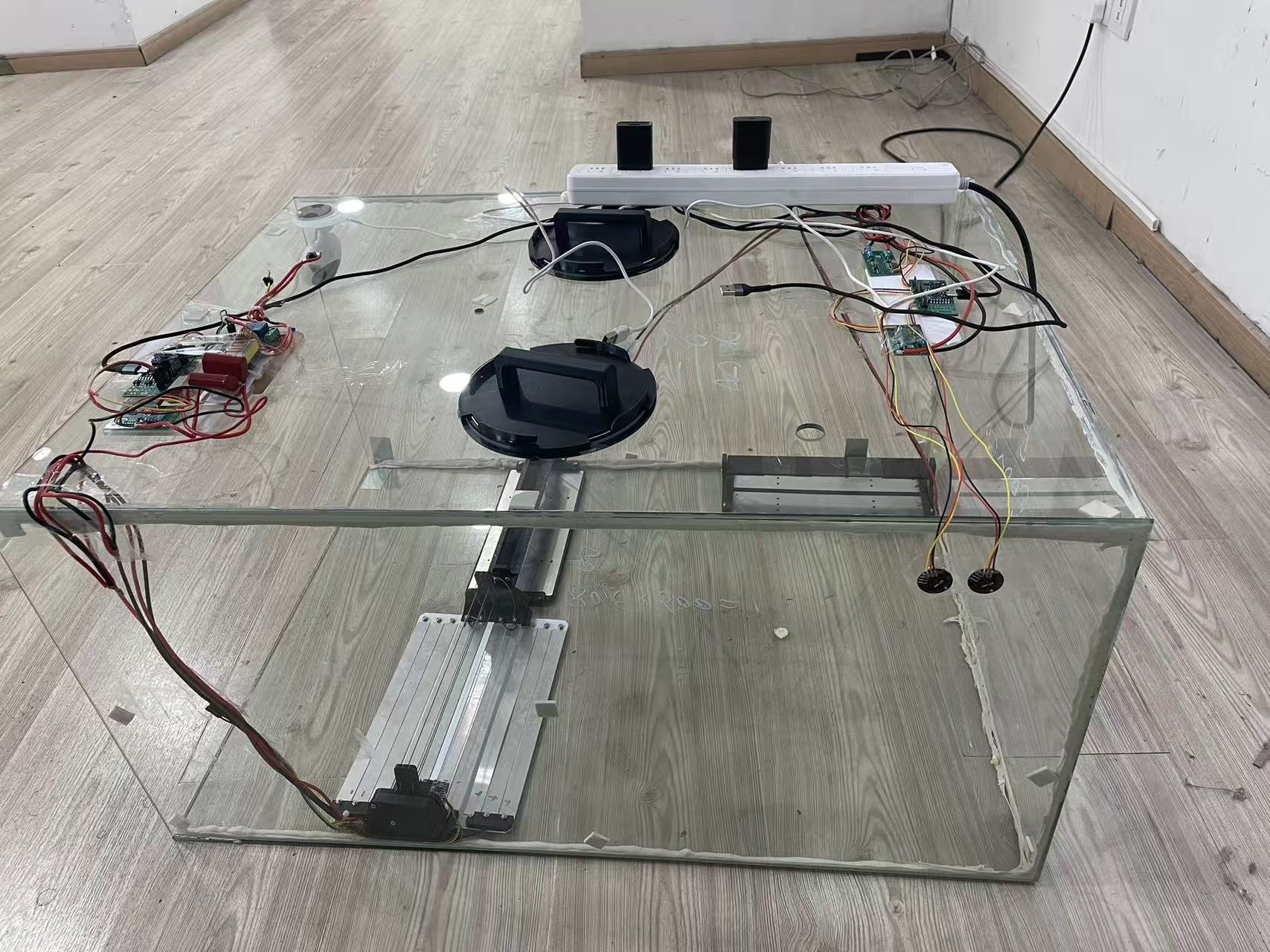
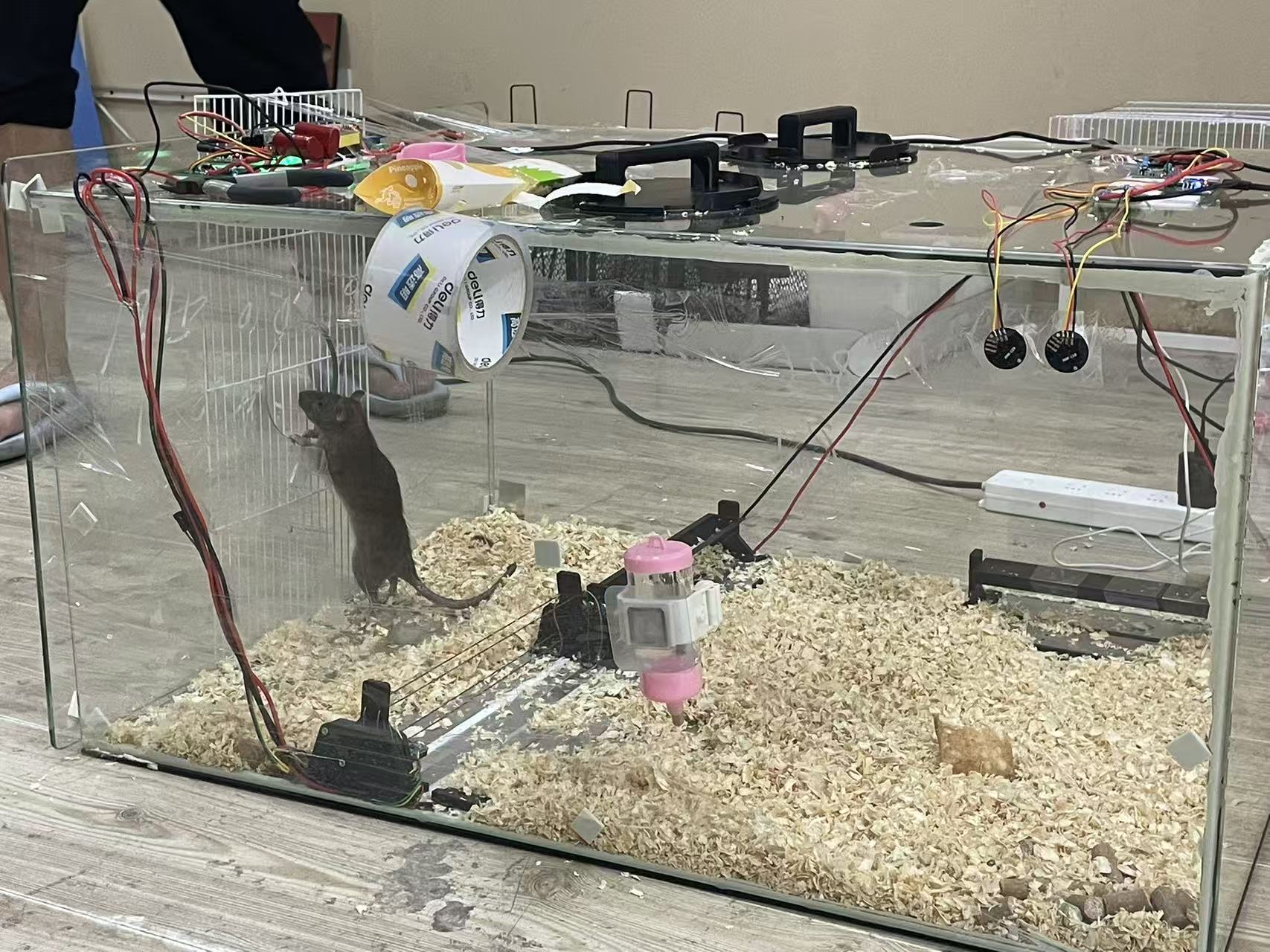
Early testing equipment and experimental space.
Prototypes and Form-Factor Iteration
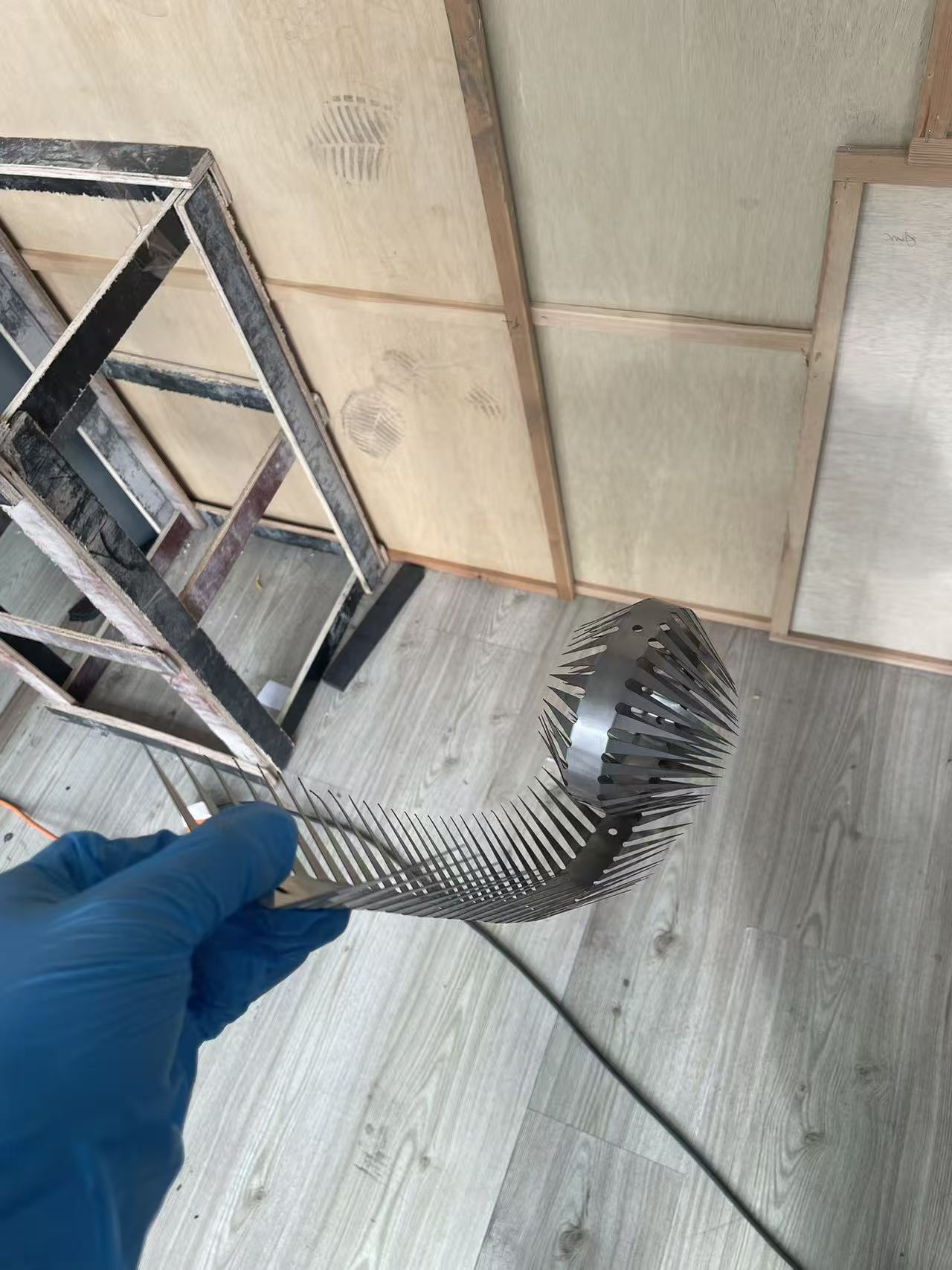
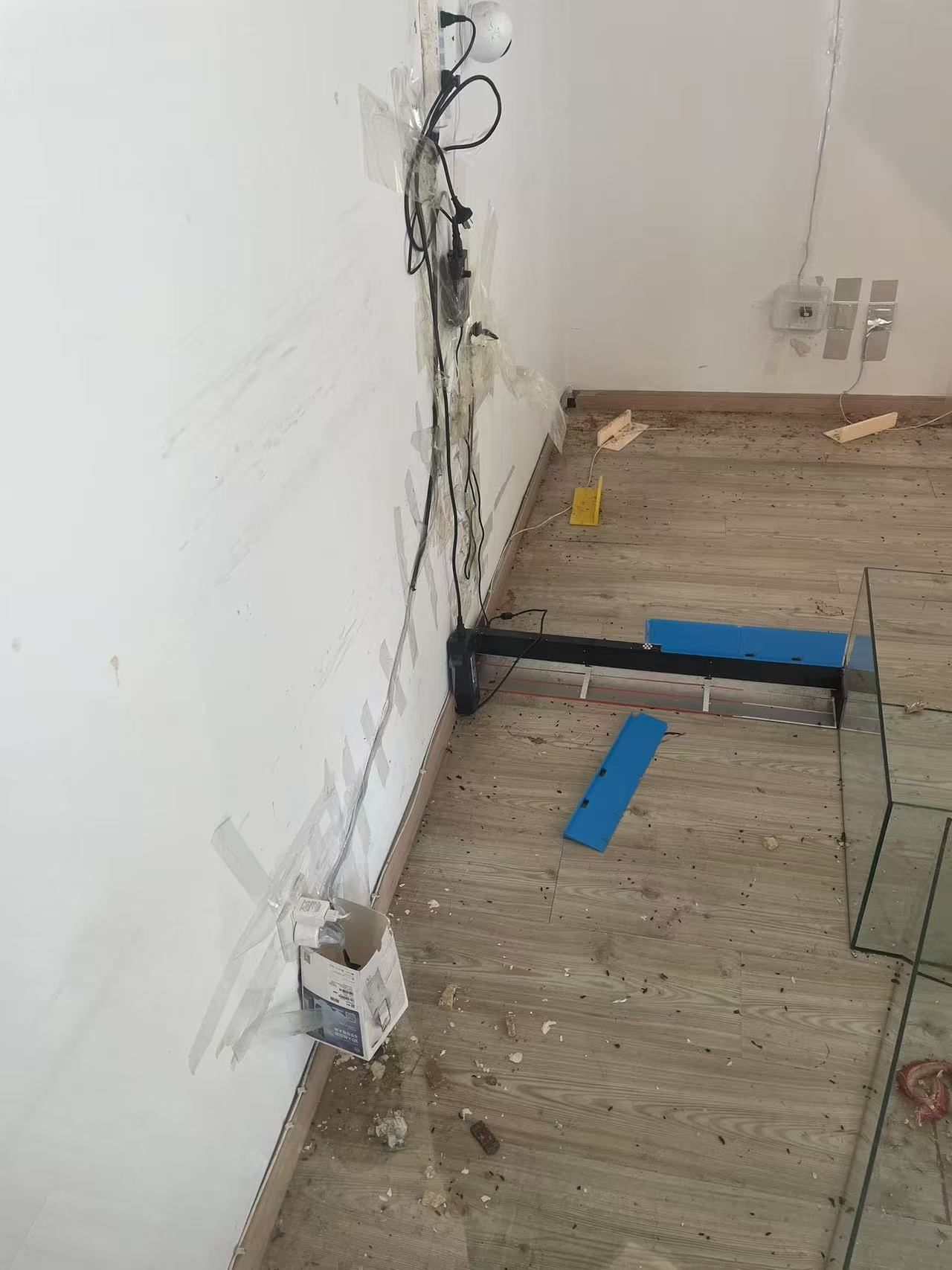
Over several months, we designed and tested dozens of different forms. The hard part was not a single technical component. The real challenge was knowing whether a solution would work in messy real-world environments and understanding the actual user decision process.
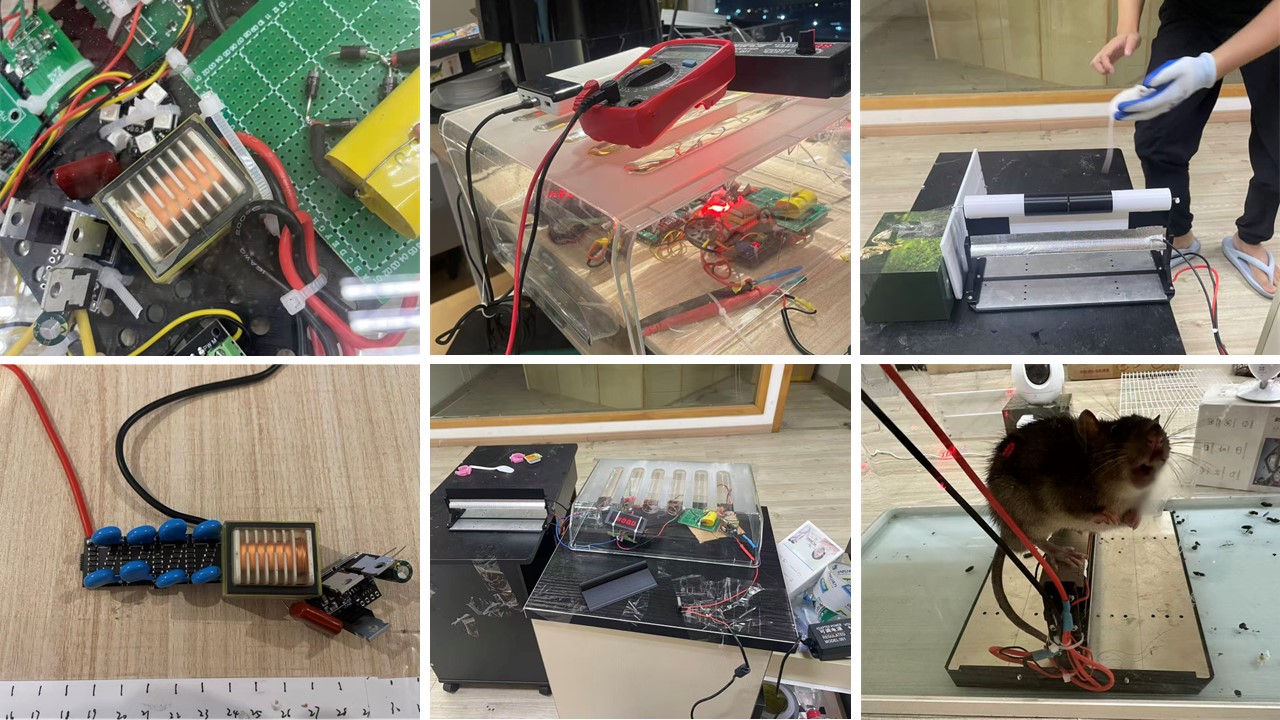
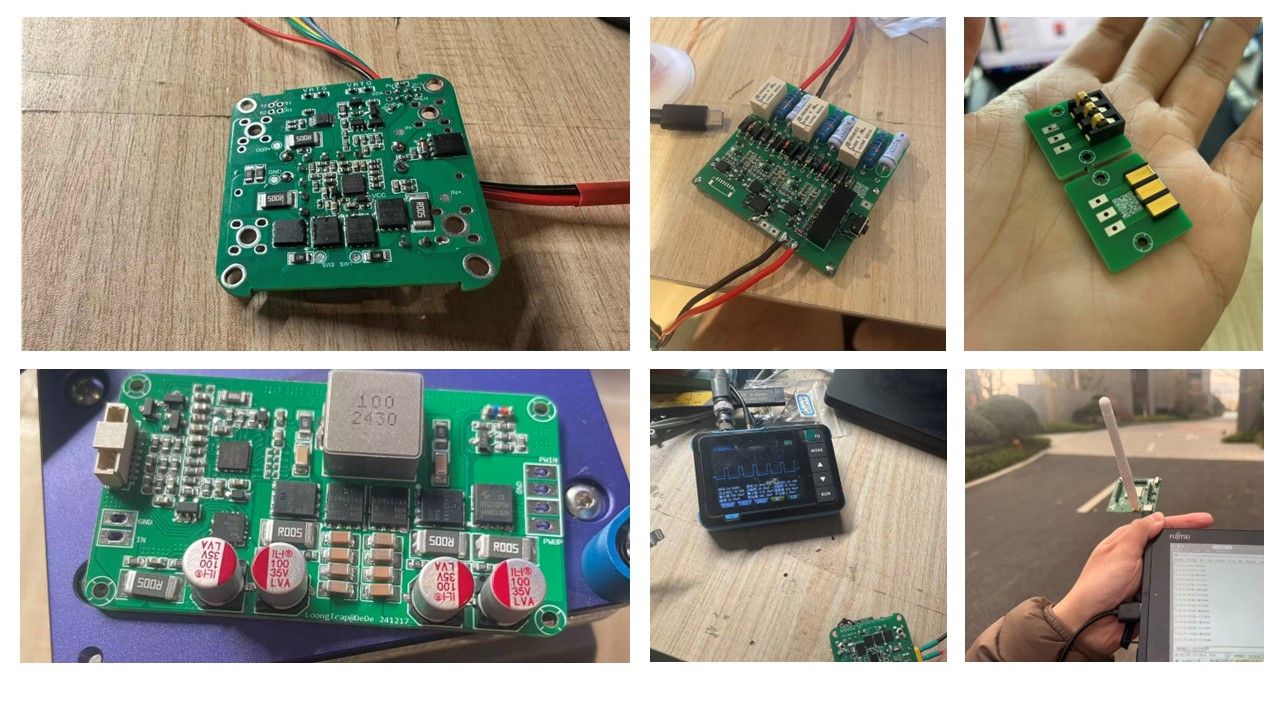
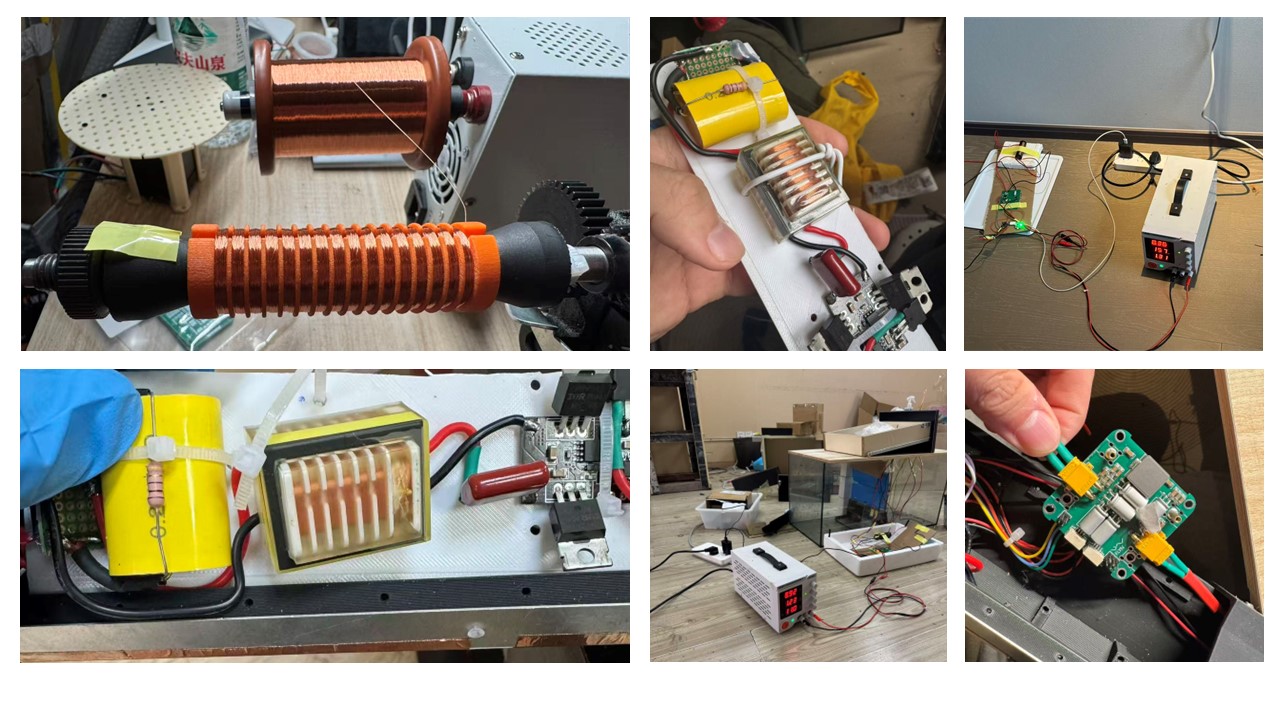
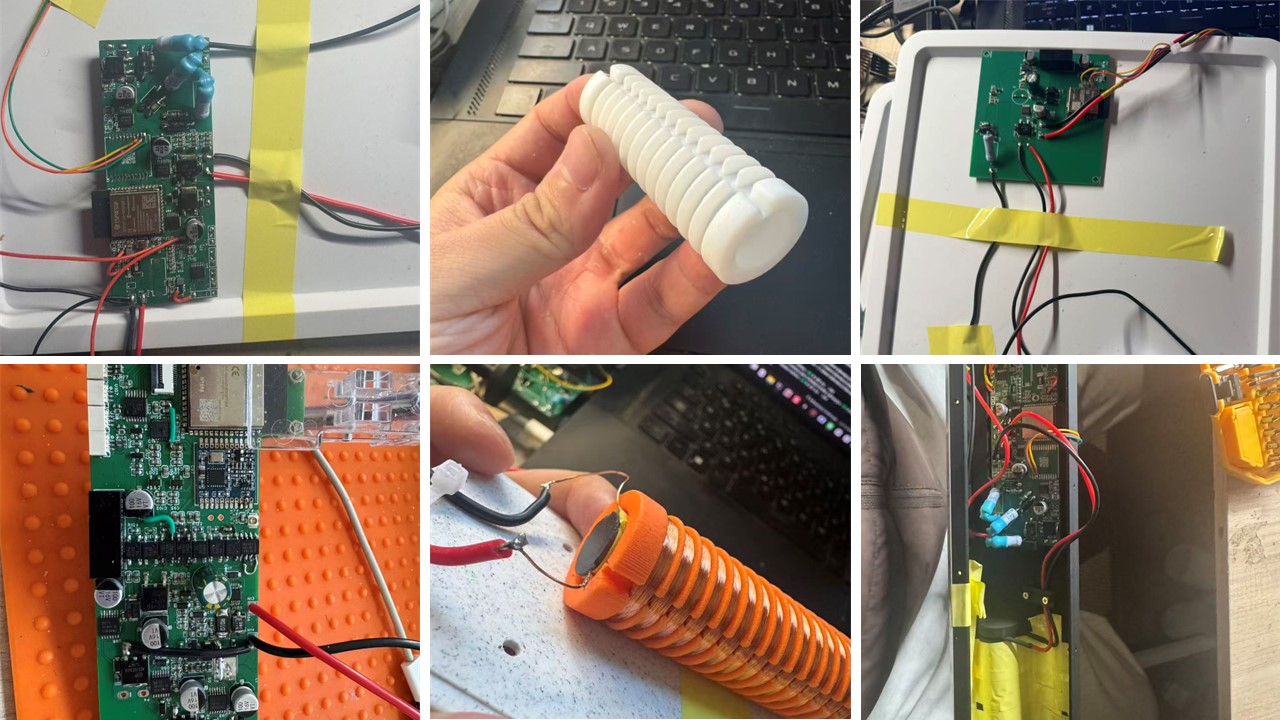
Early structure, circuit, and trigger experiments.
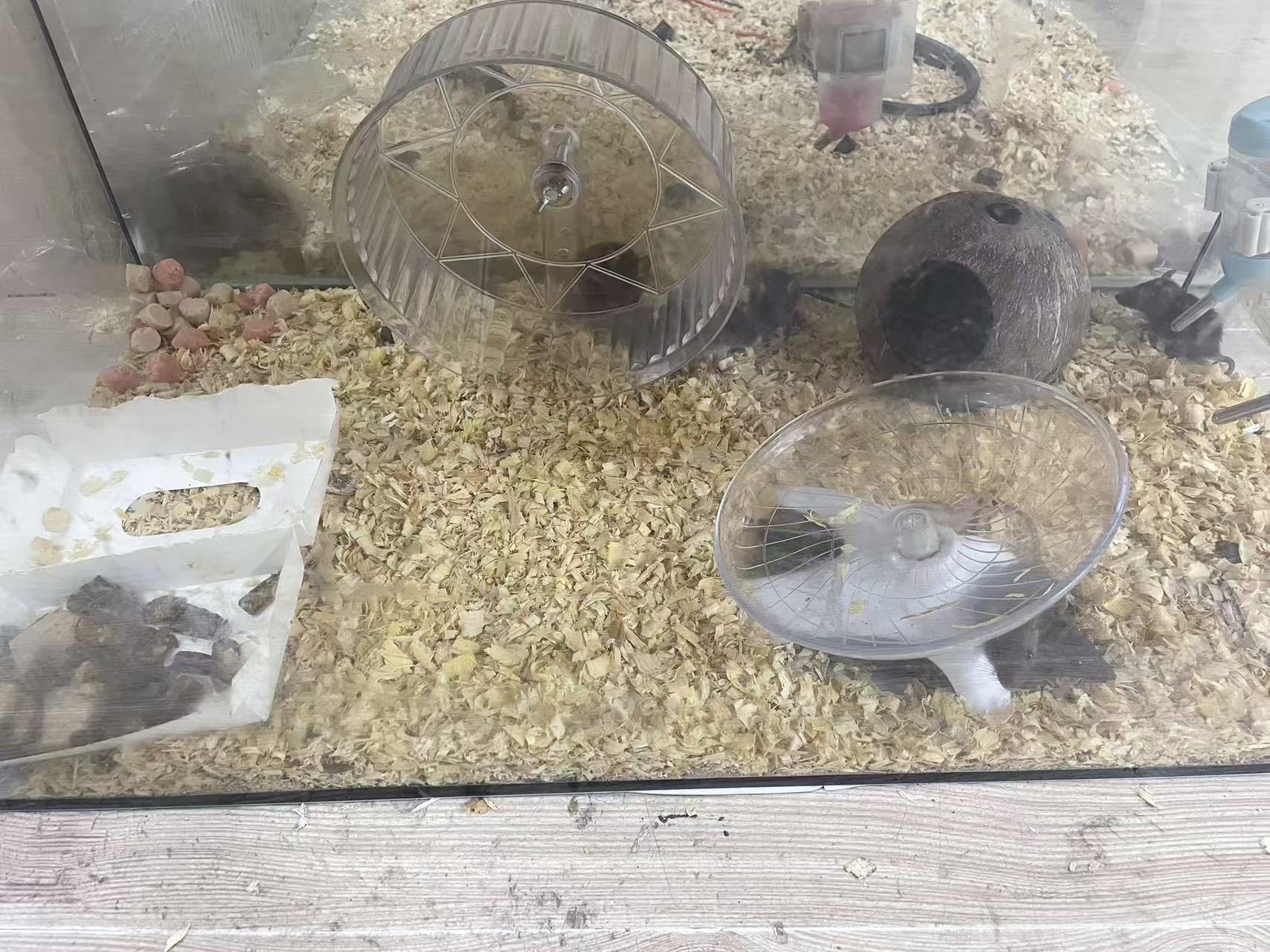
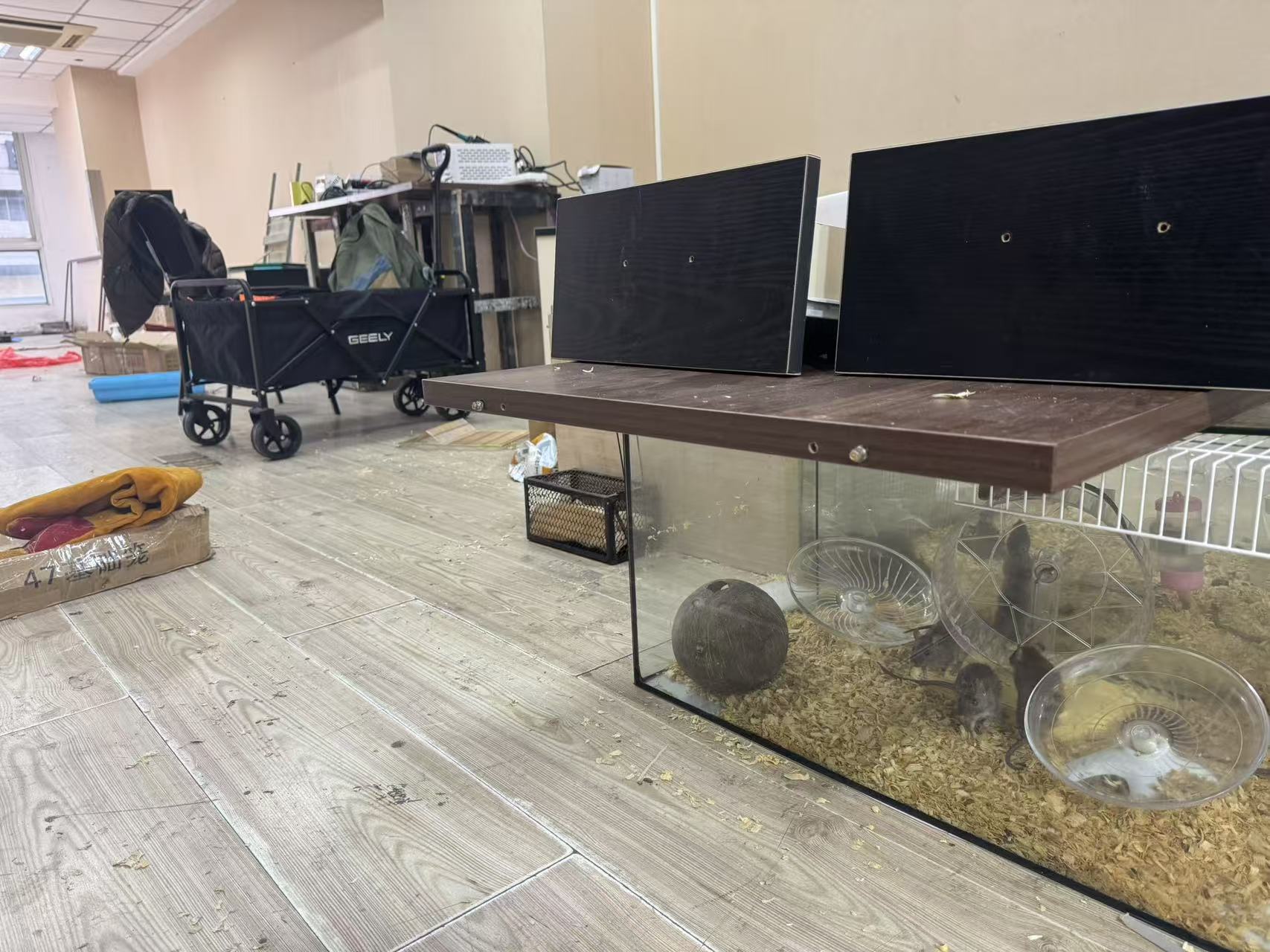
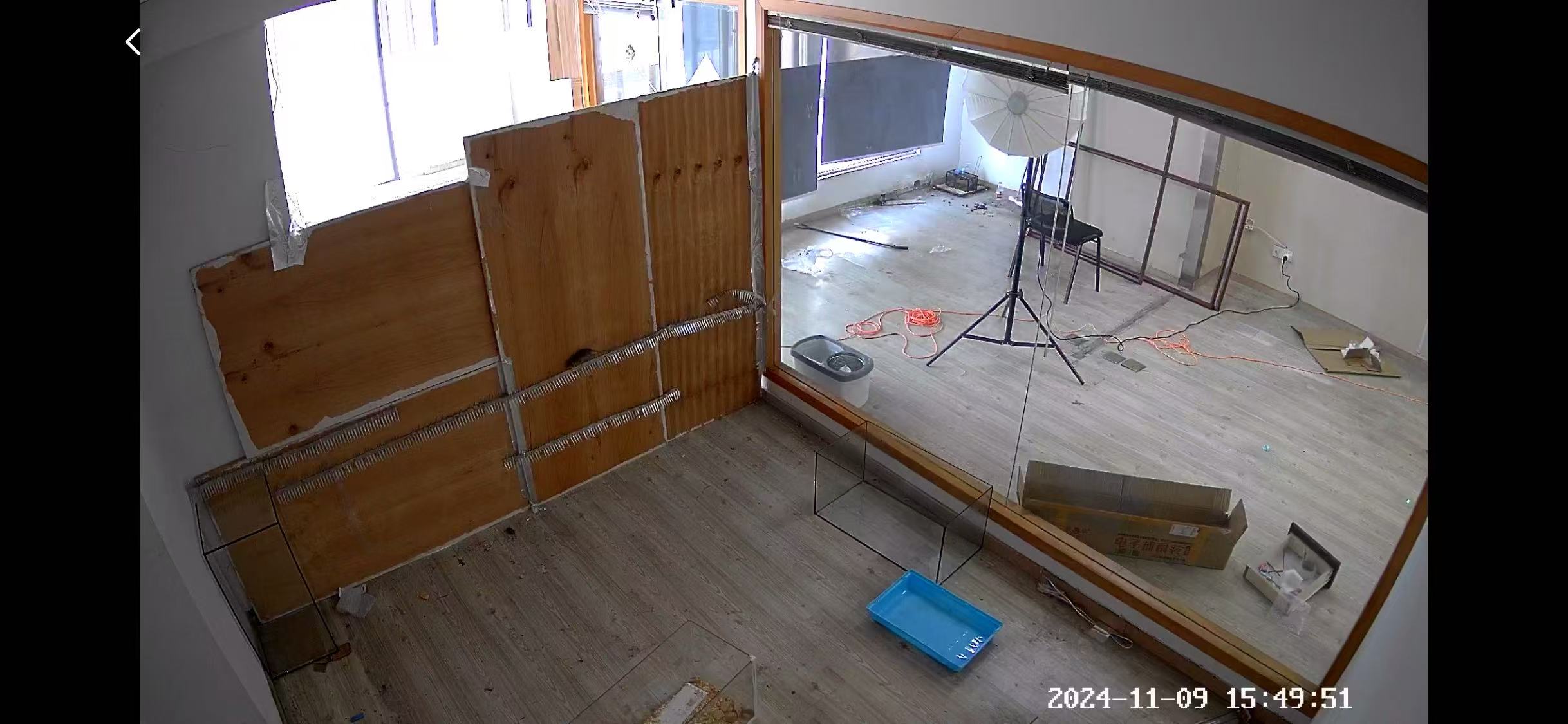
Building a dedicated test space.
B2B Validation and Lessons
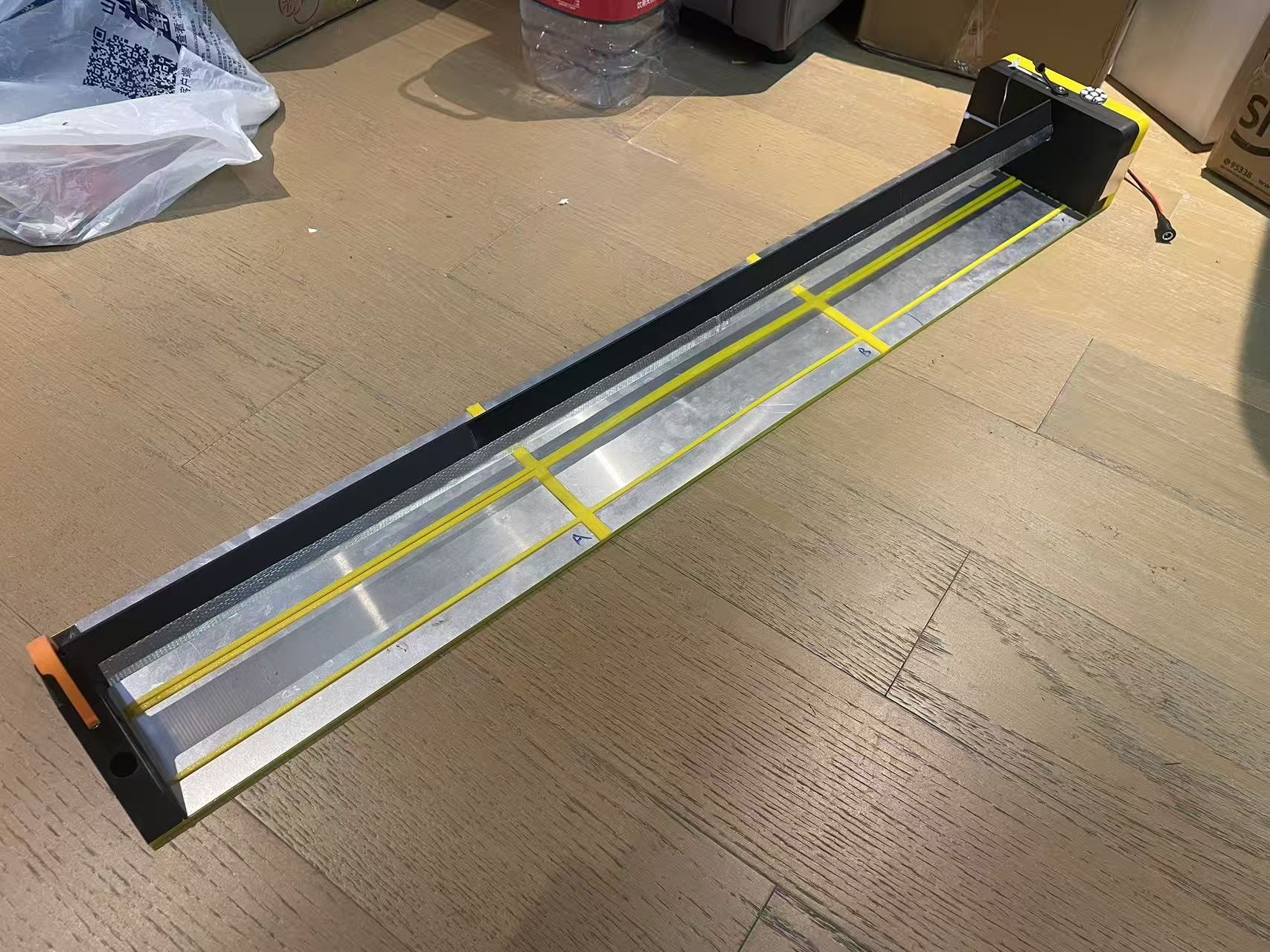
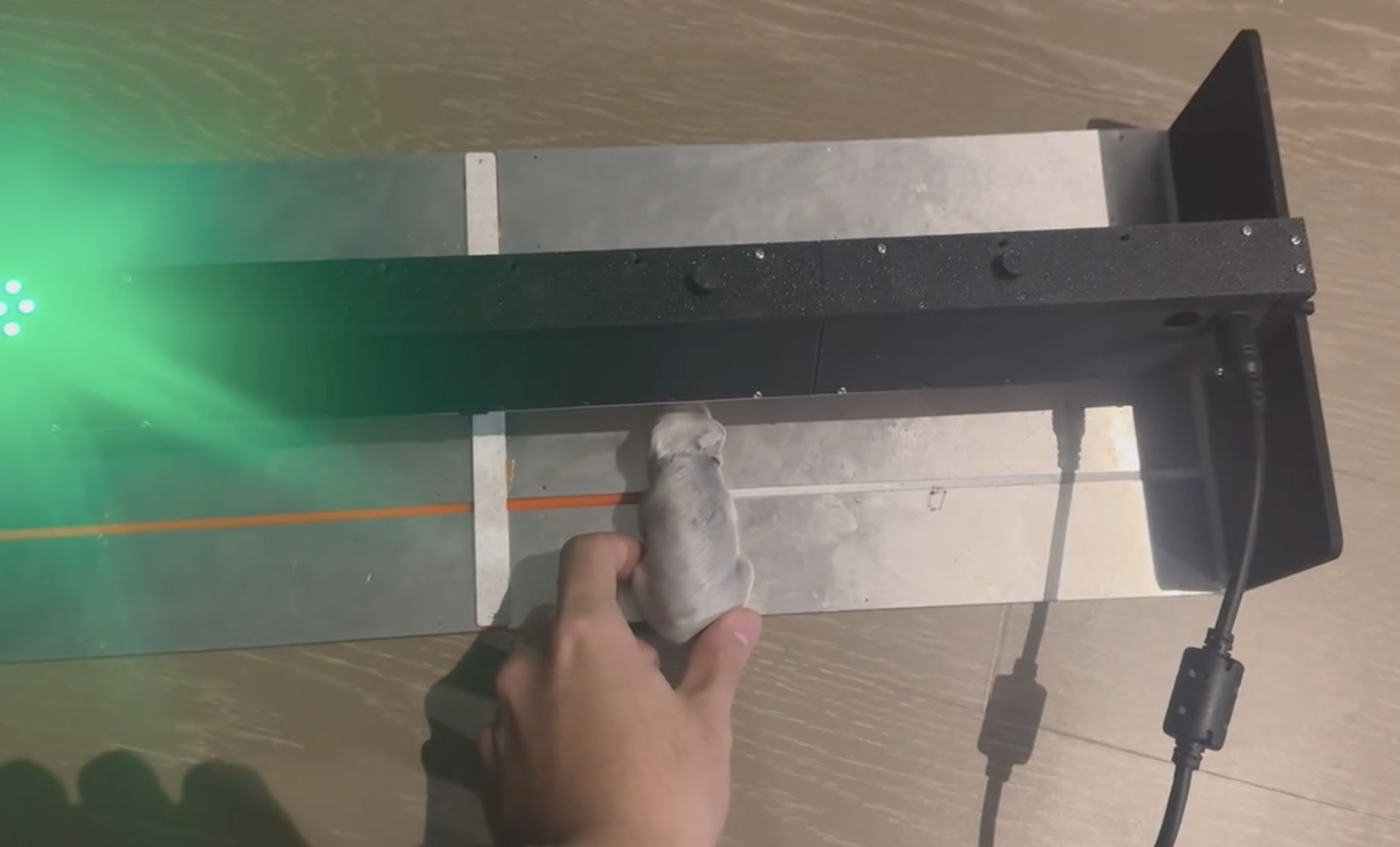
One early direction was a long-form B2B device. It helped validate stronger on-site capability and remote notification, while also exposing practical issues such as safety detection, maintenance, water, oil, installation, and after-sales support.
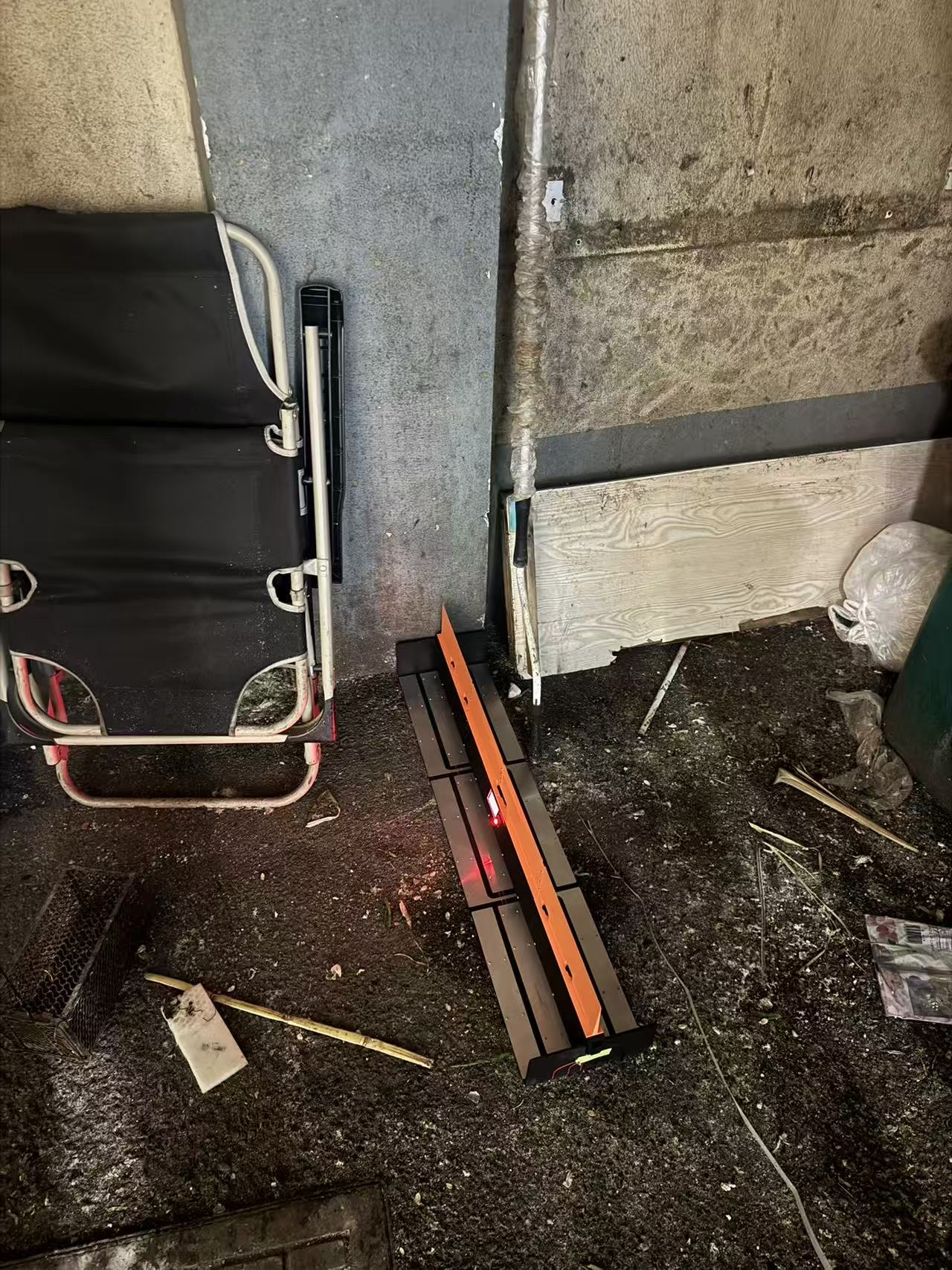
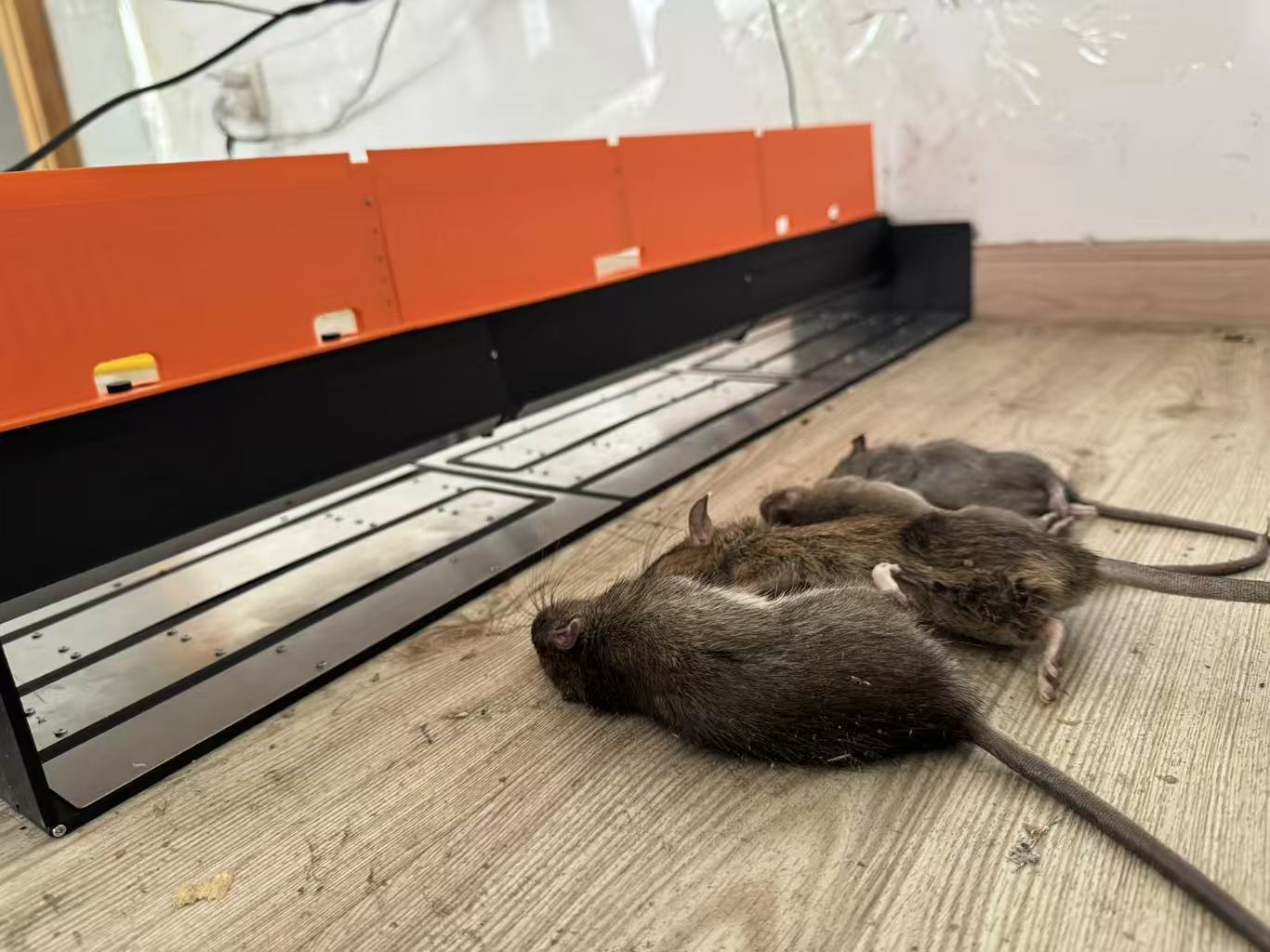
Early B2B device testing.
The key lesson was that a strong device does not automatically mean the market will adopt it. B2B purchasing decisions, sales capability, existing business models, equipment cost, and value distribution all affect adoption.
That experience made it clear that hardware products cannot be evaluated only through engineering performance. The product must also fit the user’s incentives and decision logic.
Moving from B2B Capability to Consumer Product
After recognizing the limits of the B2B path, we moved part of the validated capability into a consumer product. Consumer users purchase and use the product themselves, so their needs for effectiveness, ease of use, cleanup, notification, and placement guidance are more direct.
We then moved through multiple rounds of consumer prototypes, iterating on size, sensors, circuits, cost, interaction, and safety strategy.
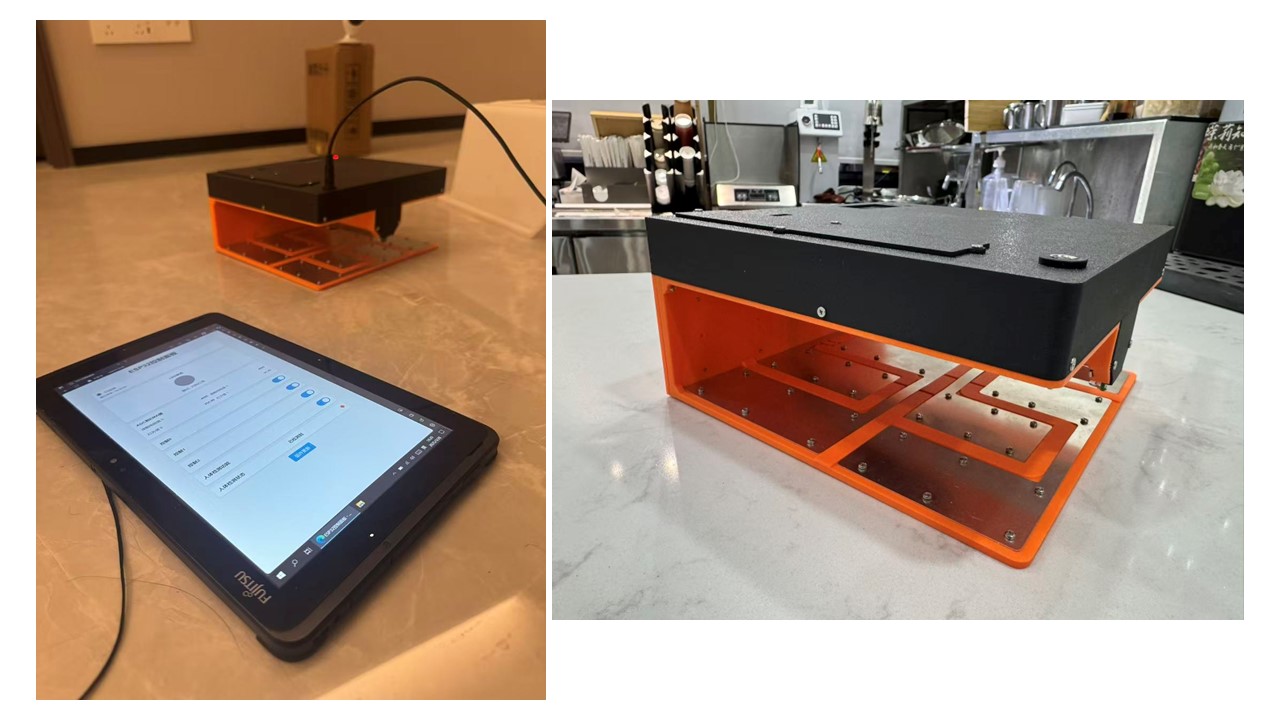
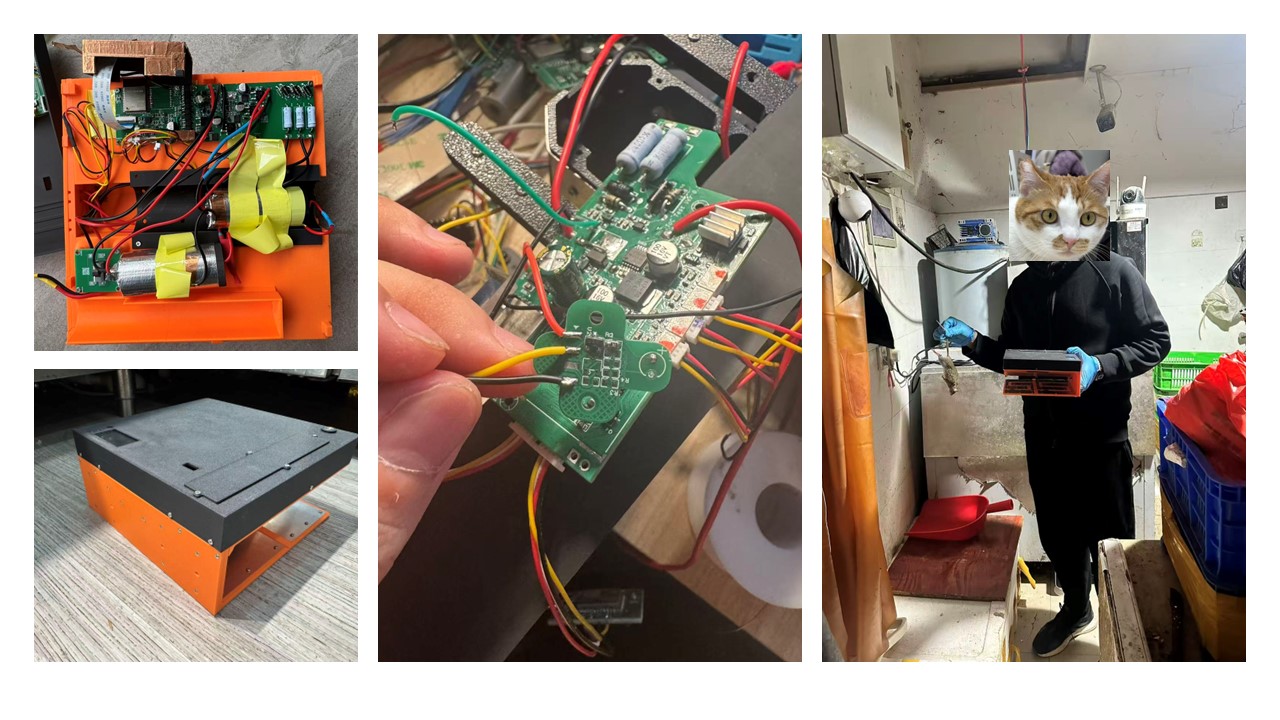
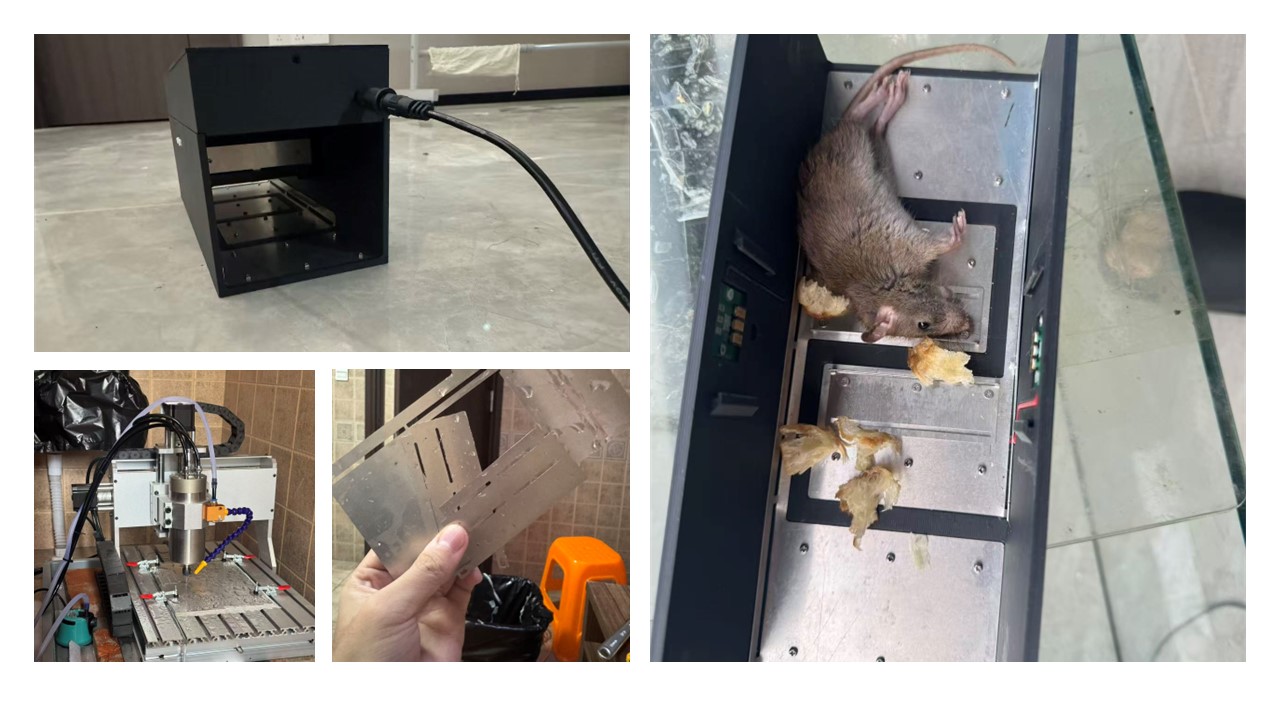
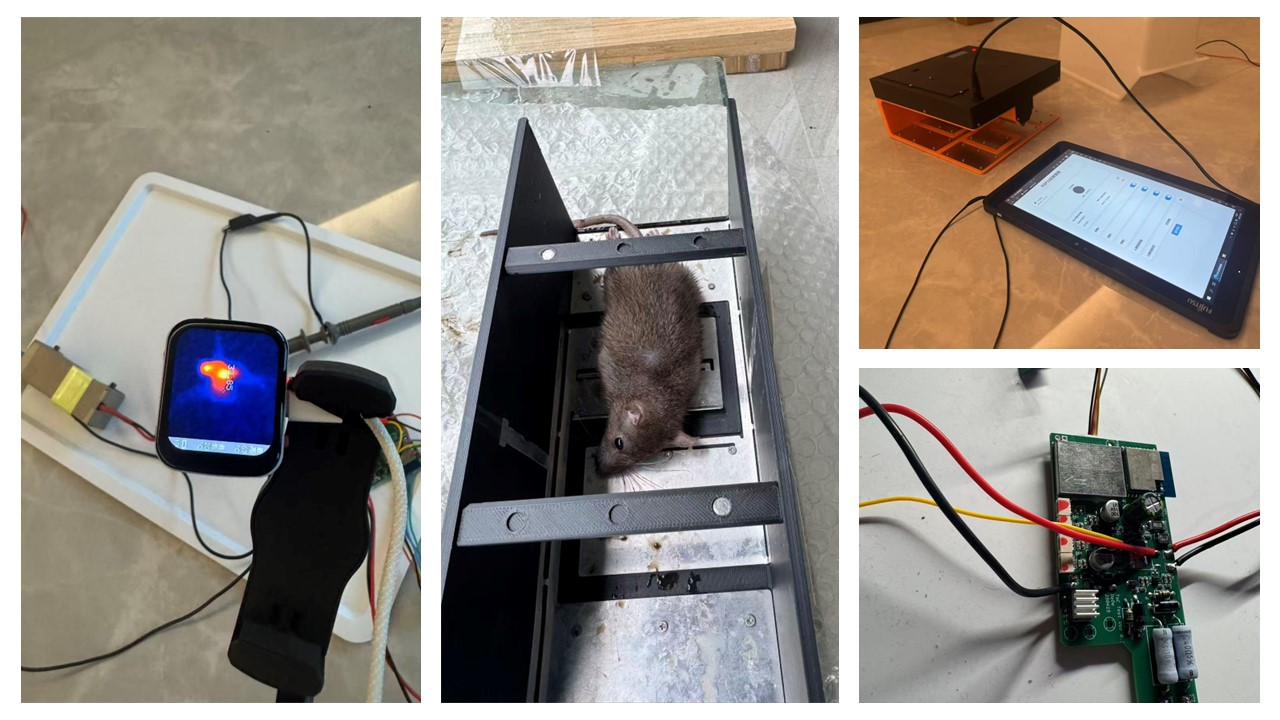
Around July 2025, we finished a prototype close to the final product direction. The team then returned to Shenzhen to work with industrial design partners, mold factories, and PCB partners with mass-production experience. The team gradually expanded from two people to five.
In this phase, I was responsible for product definition, prototype design, mass-production introduction, global multi-region IoT hardware and software architecture, app design, and building an AI-based internal development workflow for faster software-hardware iteration.
Continuing Product-Line Exploration
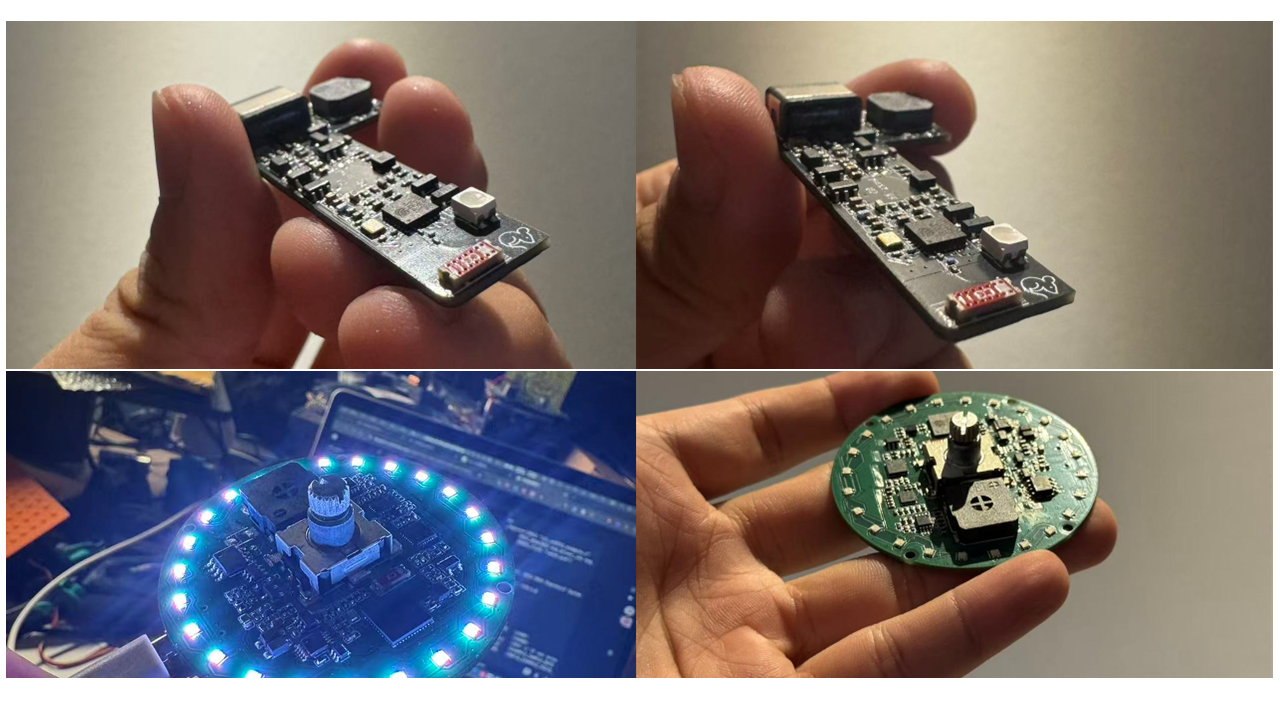
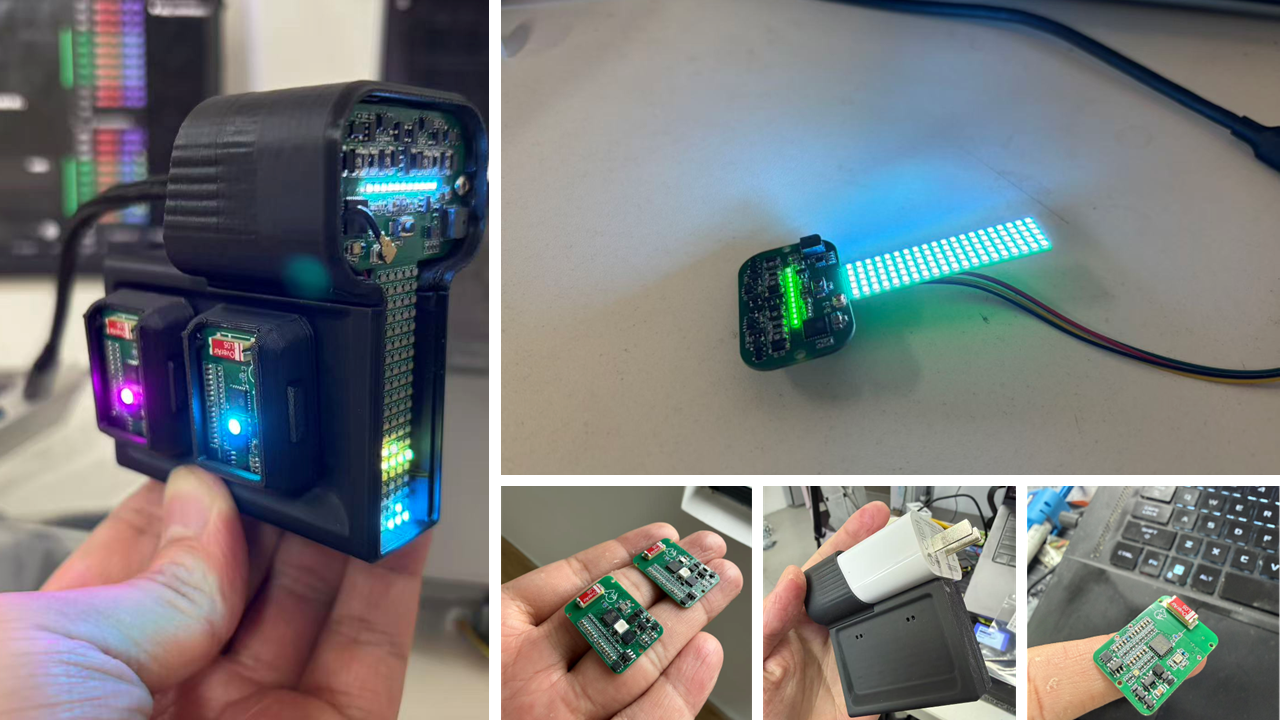
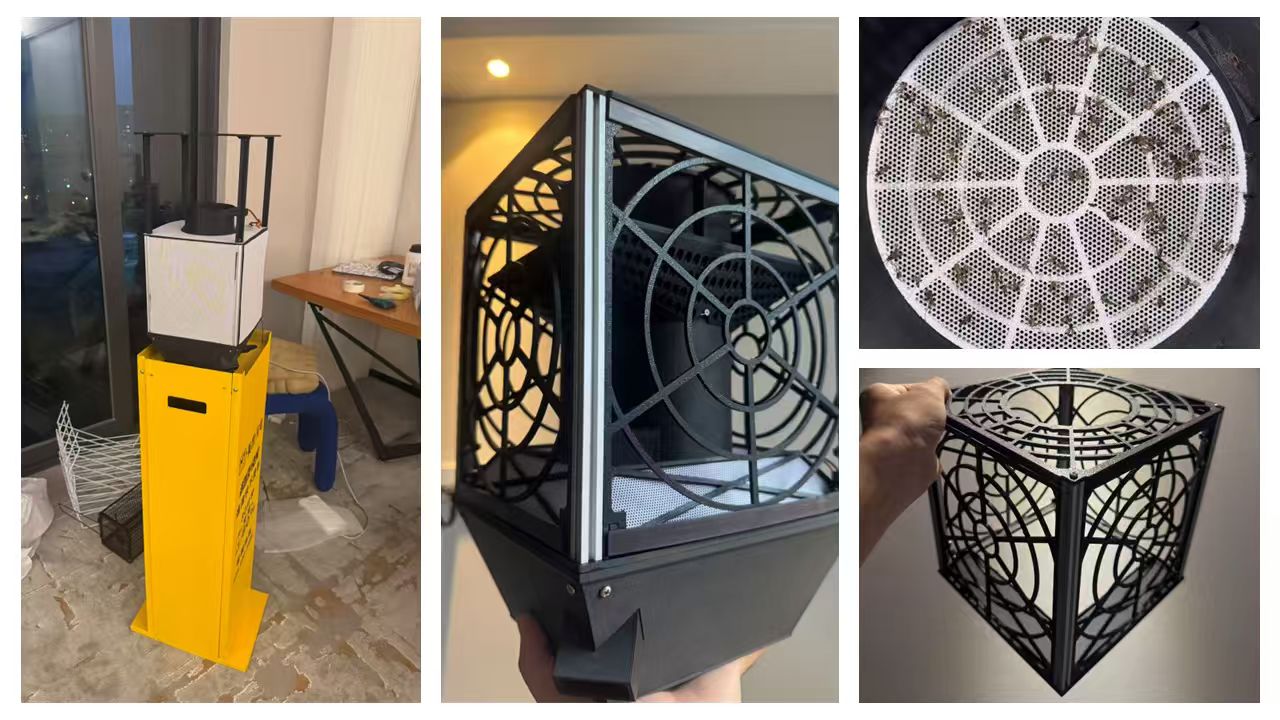
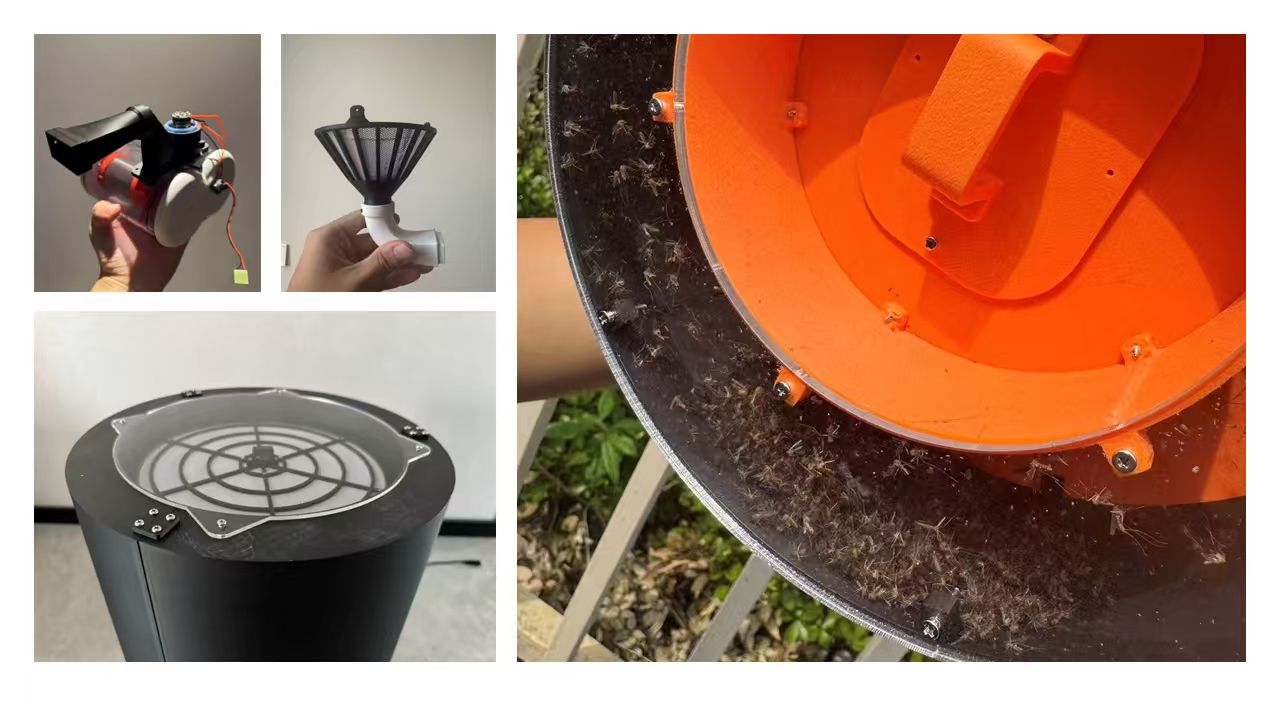
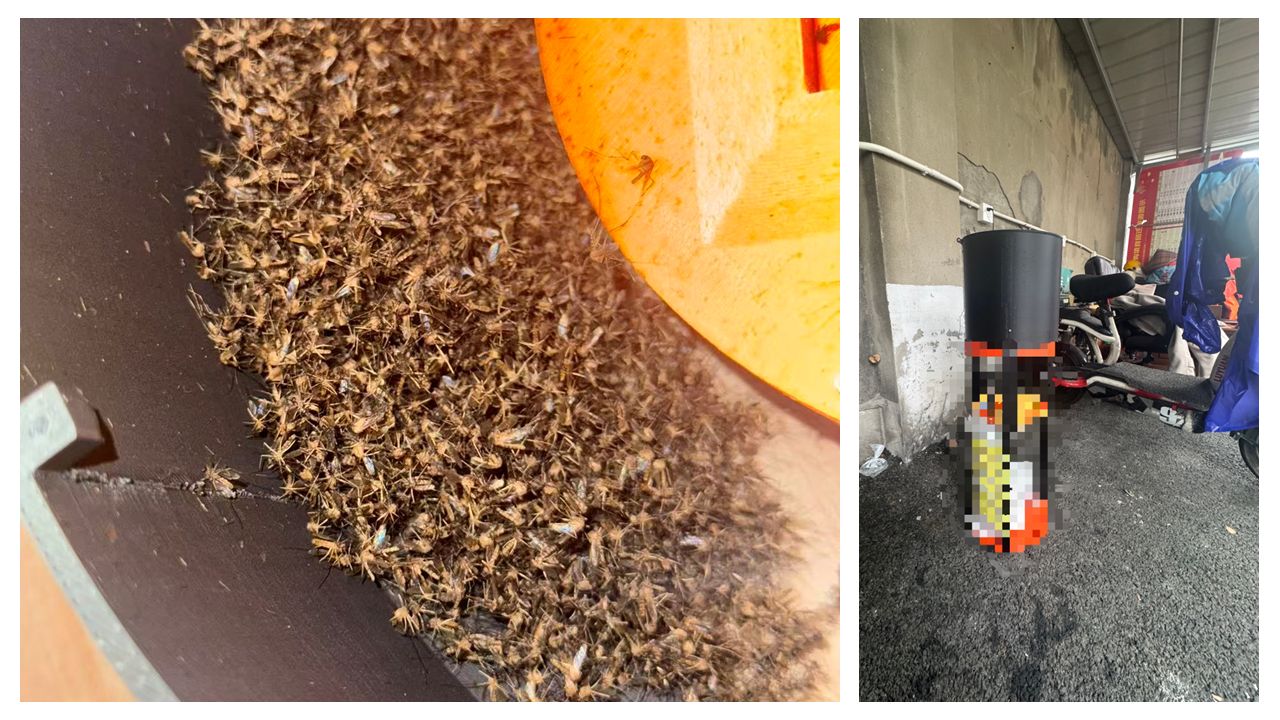
While pushing the consumer product toward production, we continued exploring other Pest Control needs, including additional rodent-related scenarios and mosquito-control products.
Takeaway
The most valuable part of this experience was not a single prototype or technology module. It was going through the full loop of direction selection, user research, field validation, hardware and software prototyping, B2B testing, consumer-product transition, mass-production preparation, and IoT system design.
It also made me more aware that hardware startup work does not end when a good device is built. The real challenge is repeatedly calibrating technology, product, market, supply chain, and business model until the team finds a direction that users genuinely need and that the team can keep delivering.