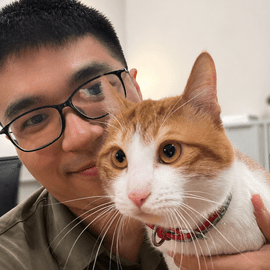
Deyang Lin (first from left)
Full-stack hardware & software engineer / Algorithm engineer / From mechanics and electronics to algorithms and mass production / Born in the 2000s
deyanglin@hkust-gz.edu.cn
Biography
Deyang Lin chose to work full time on a robotics studio after being recommended for graduate admission during his senior year in 2022. The studio provides integrated robot solutions for education and competition scenarios. As founder and CTO, he is responsible for the hardware and software technical direction, system solution design, and implementation, while also serving as an end-to-end robotics design engineer. His long-standing passion for robotic systems enables him to independently drive complex robot development from concept and mechanical structure to electronics and software control, while balancing performance, cost, usability, and market competitiveness.
In 2024, after the studio became more stable and part of its work had been productized, he began exploring consumer-product entrepreneurship for overseas markets in the Pest Control field. The direction focuses on making traditional products with persistent and growing demand smarter and easier to use through intelligent hardware and software systems. As CTO, starting from an early two-person team, he participated in and led product definition for smart rodent and mosquito control products, prototype design, manufacturing introduction, global multi-region IoT hardware and software architecture, and app design. He also built an AI-assisted hardware and software co-development workflow inside the team, enabling faster iteration across both hardware and software.
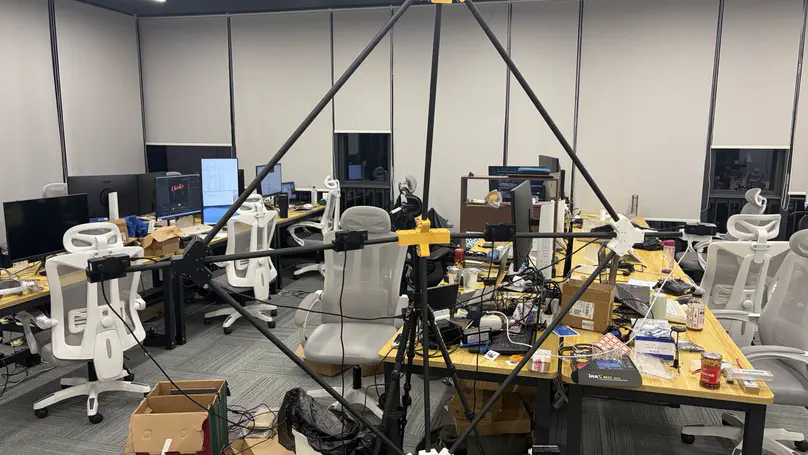
- Dynamic 4D reconstruction and multi-camera synchronized capture systems
- Hardware design (mechanical design, embedded design)
- Software design (full-stack web development, IoT system architecture)
- A lot of 0-to-1 projects — from the first idea and MVP through engineering, team building and shipping a product
-
B.E. in Automation, 2018–2022
Guangdong University of Technology
-
Recommended for graduate admission to the School of Mechanical and Aerospace Engineering in 2022. By then the studio was already busy enough that I took leave shortly after enrolling and went all in on it — on leave 2022–2023, and withdrew in 2024 to keep building in a new direction.
Jilin University
Experience
Main responsibilities:
- Explored new directions after XbotPark Camp and settled on Pest Control smart hardware for global markets, through market screening, user interviews and field research.
- As founder and CTO, led product definition, prototype design and mass-production introduction for consumer rodent- and mosquito-control devices.
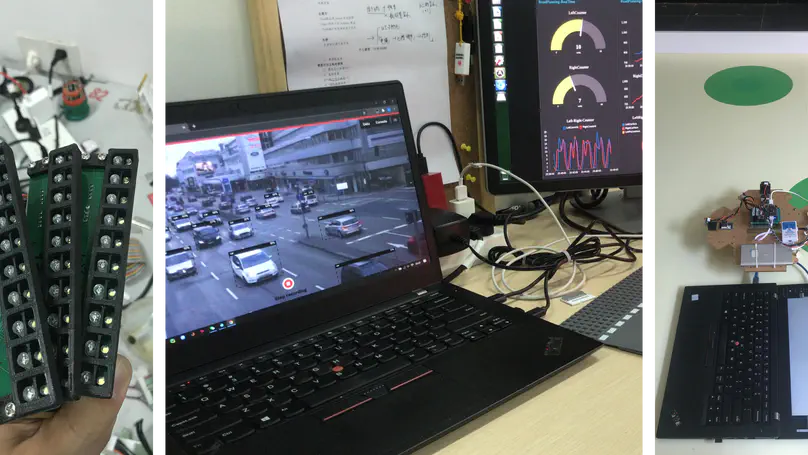
- Built the early field-testing and multi-sensor data-collection systems, and drove several validation rounds across mechanical structure, circuits, embedded systems, detection and safety strategy.
- Led the global multi-region IoT hardware and software architecture, the app plan, and an internal AI-assisted workflow for hardware–software co-development.
- Drove the consumer Pest Control hardware startup (2024–present) from B2B validation to consumer productization and mass-production readiness.
Main responsibilities:
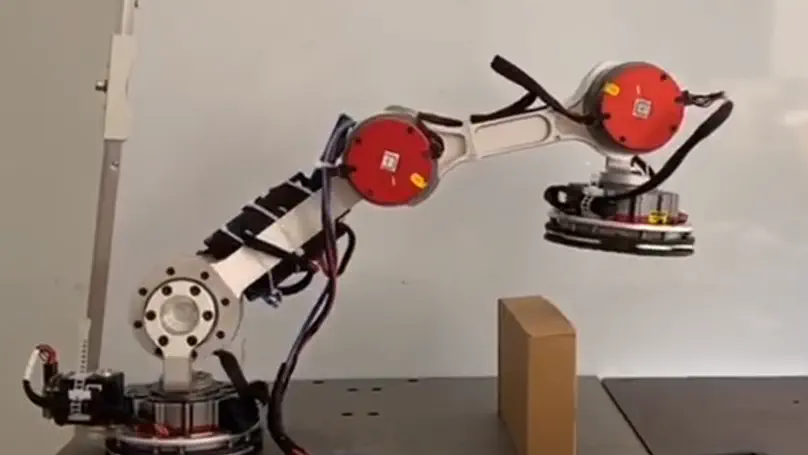
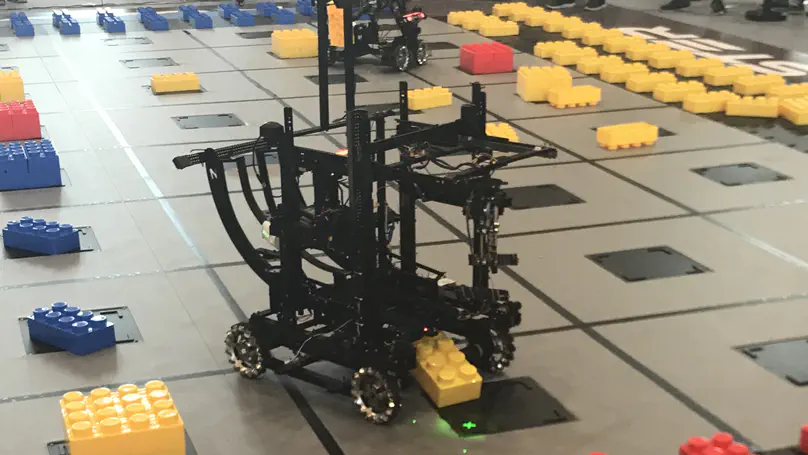
- Designed complete robot solutions, hardware and software.
- Made the robots more competitive at the same or lower hardware cost, through better software, control algorithms and system design.
- Built dynamic visual design and perception capabilities for interactive art installations.
- Productized DeDeMotor, an improved motor driver; DeDeYOLO, a low-cost low-power YOLO camera; Video2Tag, a web-based auto-labeling tool; and DeDeIMU, a high-performance 6-axis gyroscope.
- 2020 GDUT Outstanding Student First-Class Scholarship (ranked 1/473).
- 2021 GDUT Outstanding Student First-Class Scholarship (ranked 5/473).
- 2021 Huawei Intelligent Base Scholarship (ranked 1/473).
- 2019 China Robot Competition (team lead) — national first and second prizes.
- 2020 Guangdong Undergraduate Electronic Design Contest (team lead) — provincial first prize.
- 2020 Guangdong Engineering Undergraduate Experimental Skills Competition, autonomous transport vehicle (team lead) — provincial first prize.
- 2021 “Challenge Cup” Guangdong Undergraduate Extracurricular Academic and Technological Works Competition (hardware and software lead) — provincial first prize.
- 2020 Mathematical Contest in Modeling (programming lead) — Honorable Mention.
Main responsibilities:
- Built a Docker-based ROS1/ROS2 development environment and a ROS Bridge Docker image, so that edge devices such as the Jetson AGX Xavier could run ROS1 and ROS2 at the same time.
- Converted Livox LiDAR data into KITTI format, then trained PointPillars on the Livox dataset and implemented forward inference. Combined with ROS bags recorded in a real mining environment, this enabled truck detection in point clouds — the groundwork for later recognizing truck unloading poses.
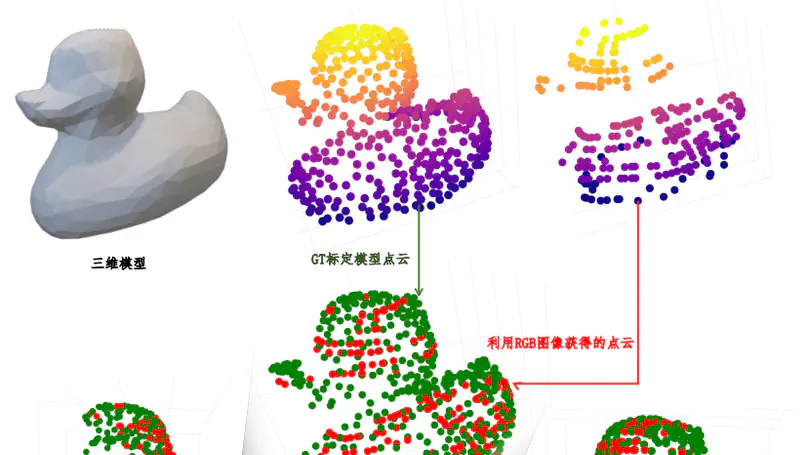
- Completed my undergraduate thesis: estimating an object’s pose relative to the camera frame from an RGB image and the object’s CAD model.
I became fascinated by mechanical and electronic design very early, and taught myself enough to finish several projects on my own — a passion that has never left. Sometimes I feel genuinely lucky to have found a direction I love this early, and that the direction happens to match what the times need.
- Middle school: built a crane controlled wirelessly by joystick. The Arduino project won second prize on the geekfans website.
- Grade 10: designed a rig that mounts several infrared probes under a car to detect animals underneath it, transmitting the detections wirelessly to an in-car receiver and display. Second prize at the provincial youth science and technology innovation competition.
- Grade 11: designed a device that checks whether a rider is wearing a helmet properly, sounding an alarm or disabling the ignition button if not. First prize at the provincial youth science and technology innovation competition.